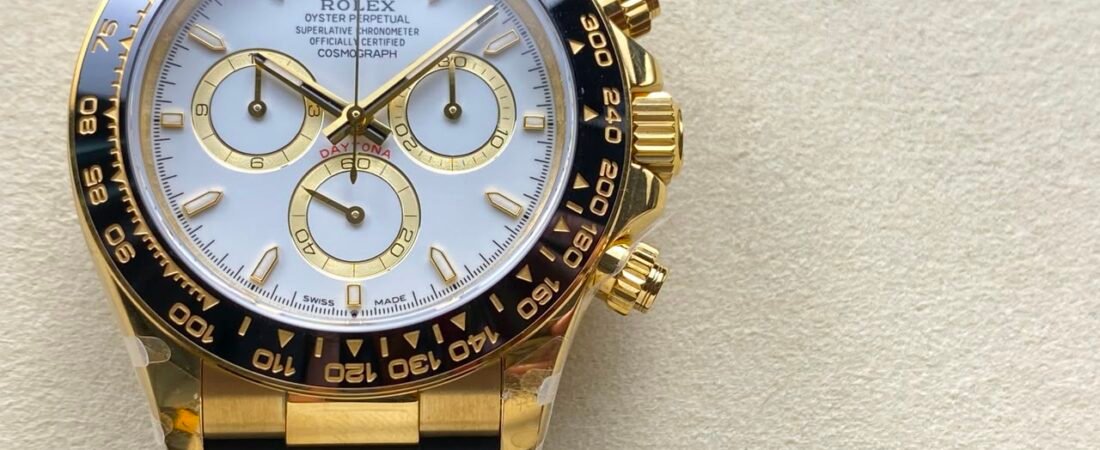
QF Factory Rolex Daytona 126518 – 155g Weighted 4131 Free-Sprung Guide
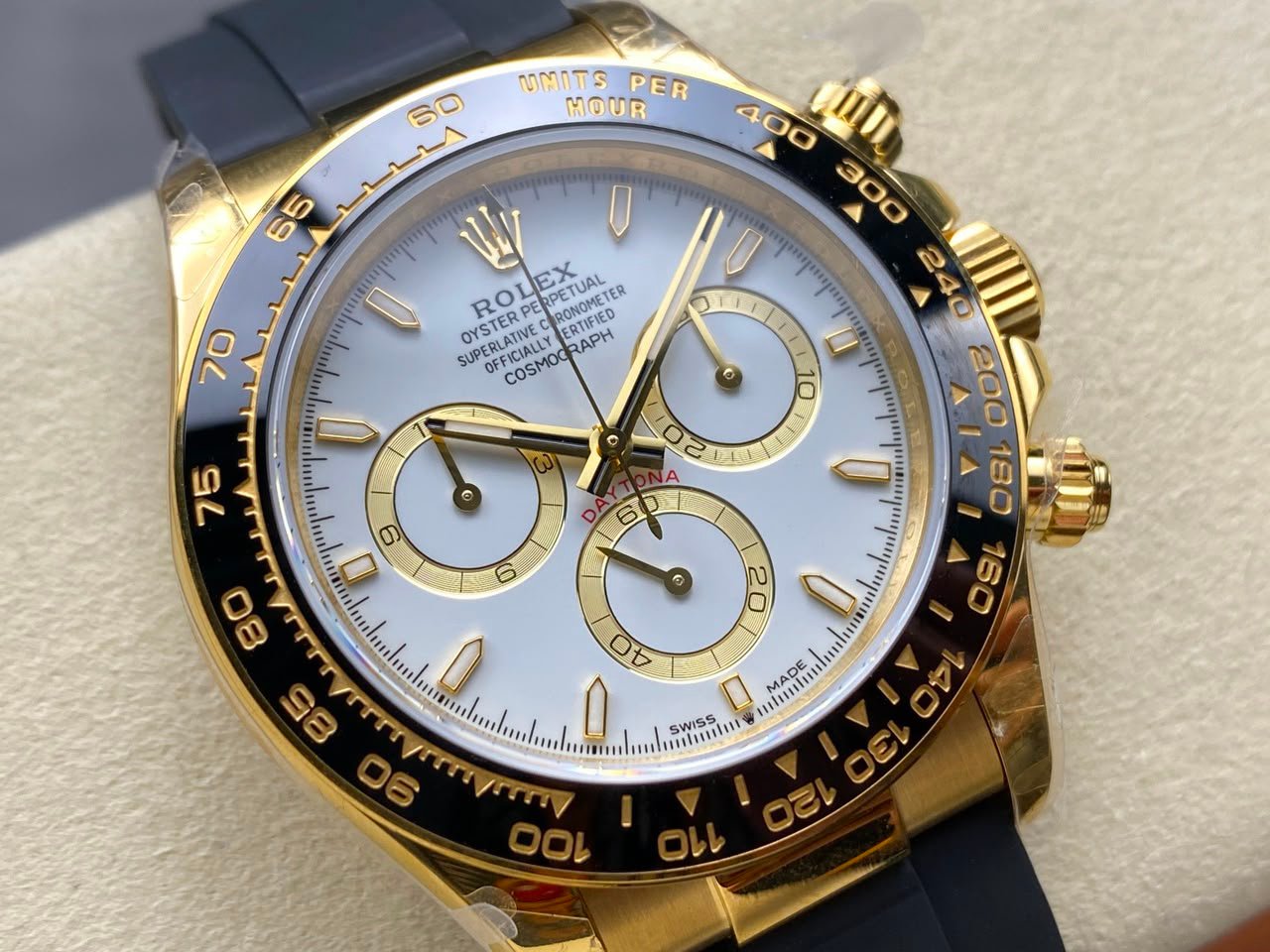
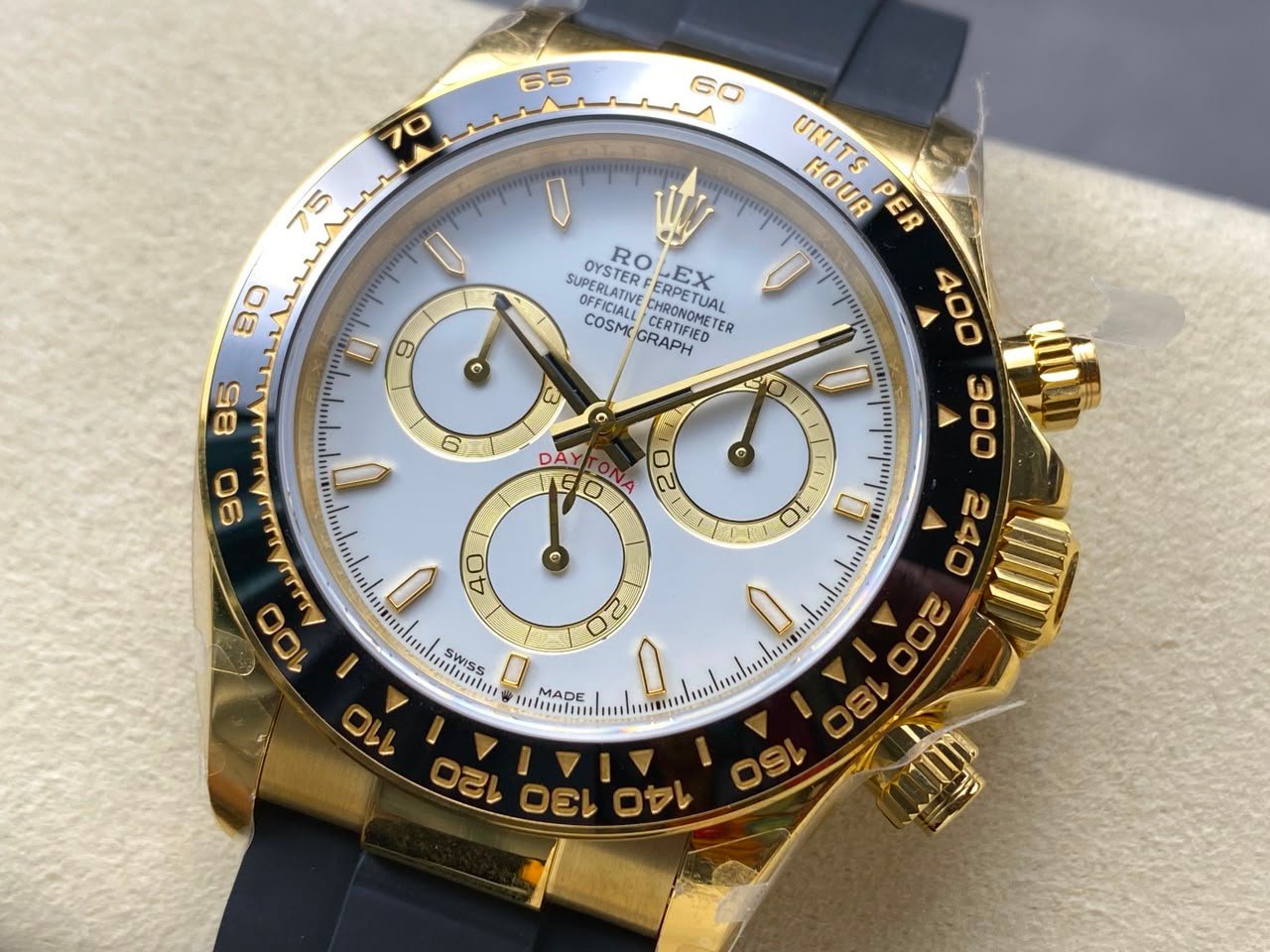
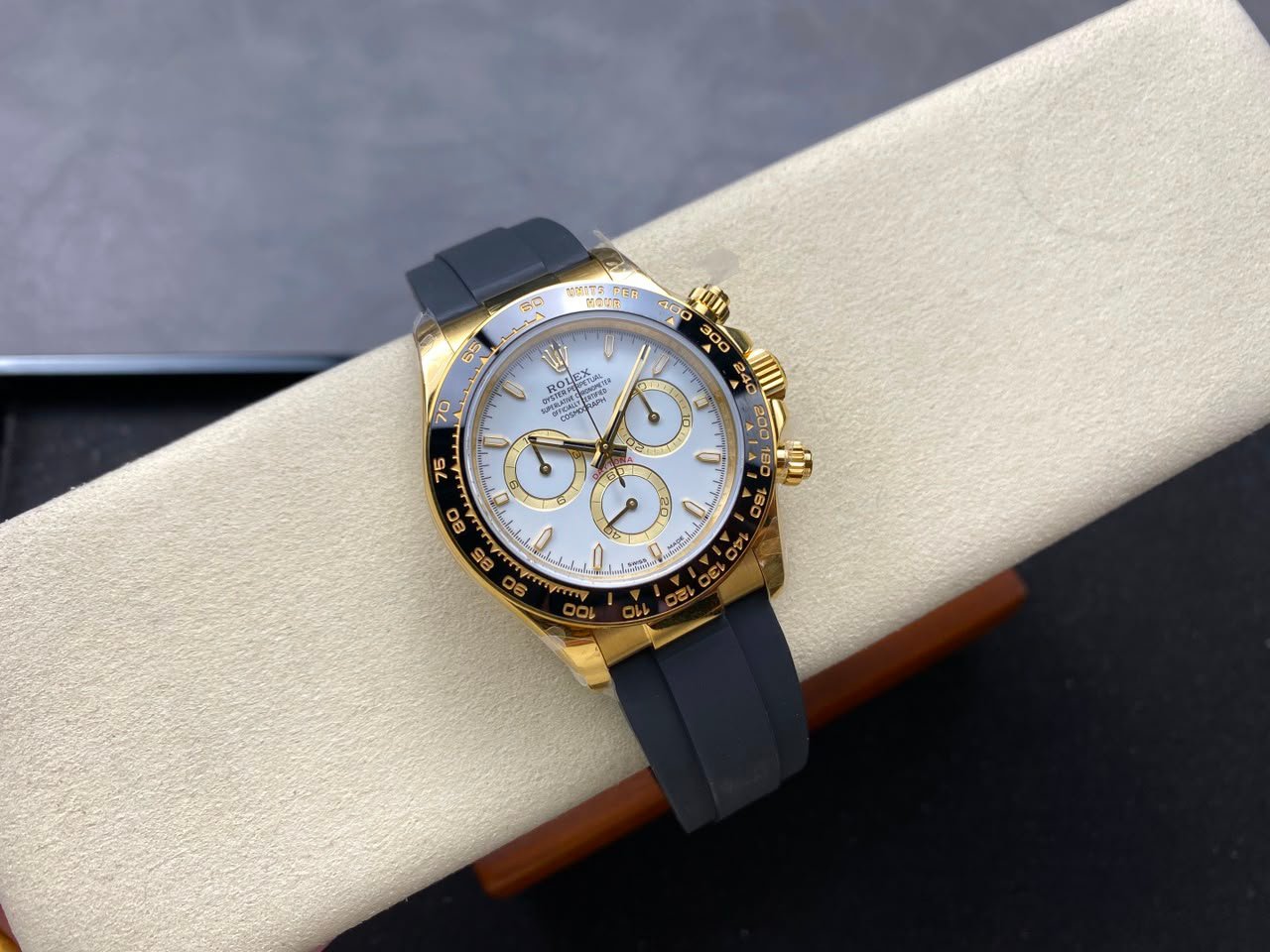
The QF Factory Rolex Daytona 126518 is a weighted rubber-strap Daytona configuration built around three details that are particularly worth looking at: an approximately 155g complete weight, black Oysterflex-style rubber strap and 4131-style free-sprung automatic chronograph movement.
The additional weight is probably the first thing most people will notice when handling this version. At around 155g, it has considerably more wrist presence than you might expect from a Daytona fitted with a rubber strap.
But weight alone does not tell us whether a watch is well made. How that weight is distributed, how the movement performs and how consistently the exterior is finished are all worth looking at separately.
Approximately 155g Weighted Construction
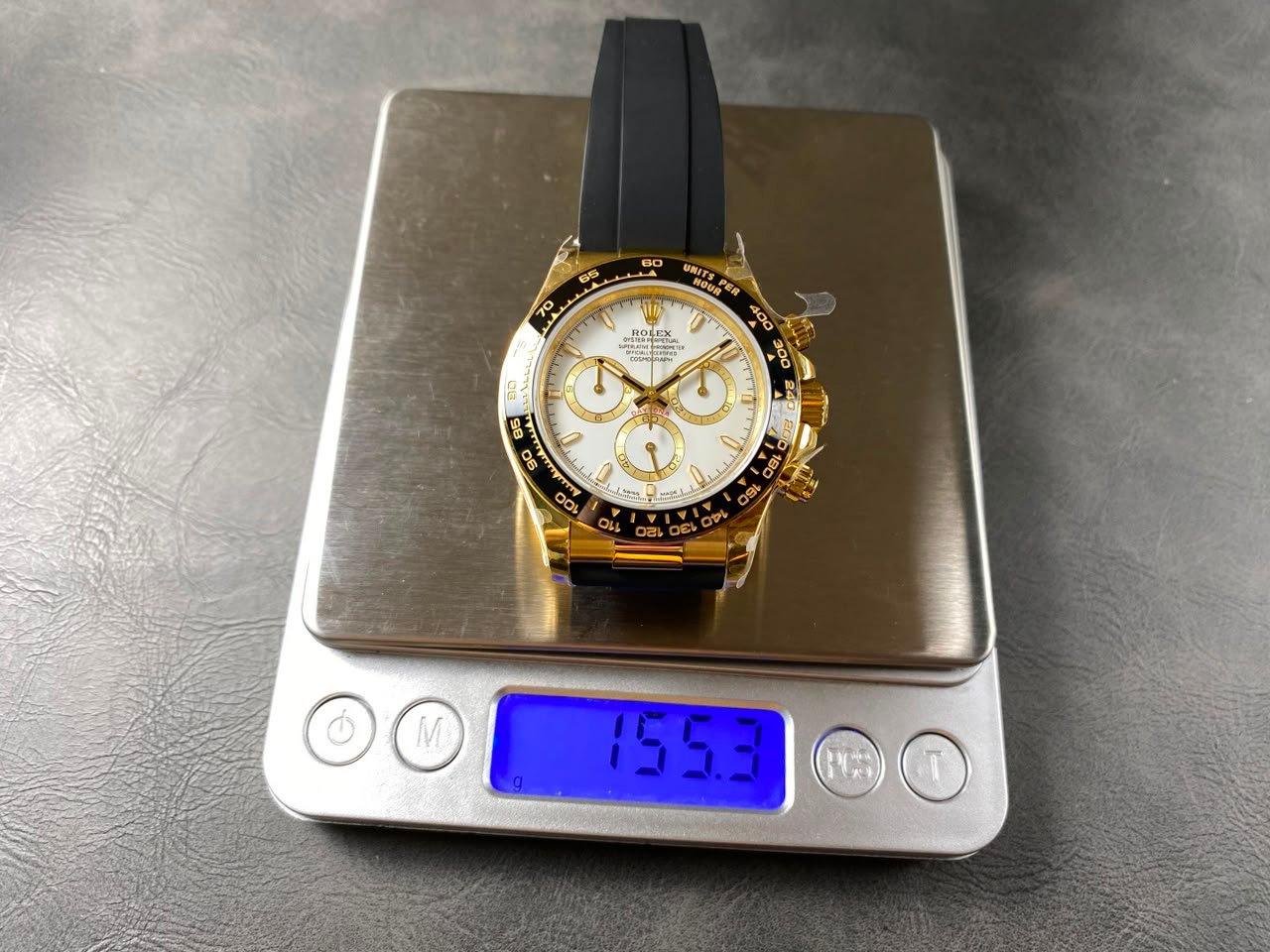
According to the supplied specifications, the complete QF Factory 126518 weighs approximately 155 grams.
That figure becomes more interesting because this is a rubber-strap configuration rather than a full metal-bracelet Daytona.
A rubber strap contributes relatively little to the total weight, so much of the wrist feel comes from the watch head and its internal weighted construction.
This can give the 126518 a noticeably denser feel when it is first picked up or placed on the wrist.
Actual weight is still something we prefer to measure on the individual watch. A calibrated digital scale provides a much more useful reference than relying only on a stated specification.
Weight Distribution Matters
Total weight and weight distribution are two different things.
Two watches can both weigh 155g but feel quite different on the wrist if the internal mass is distributed differently.
With a rubber-strap Daytona, this becomes even more noticeable because there is no heavy metal bracelet to distribute part of the weight around the wrist.
A well-balanced configuration should still sit naturally once the strap is correctly sized.
This is why we look at actual weight and wearing balance separately, rather than treating a heavier number as an automatic indication of better quality.
Gold-Tone Exterior
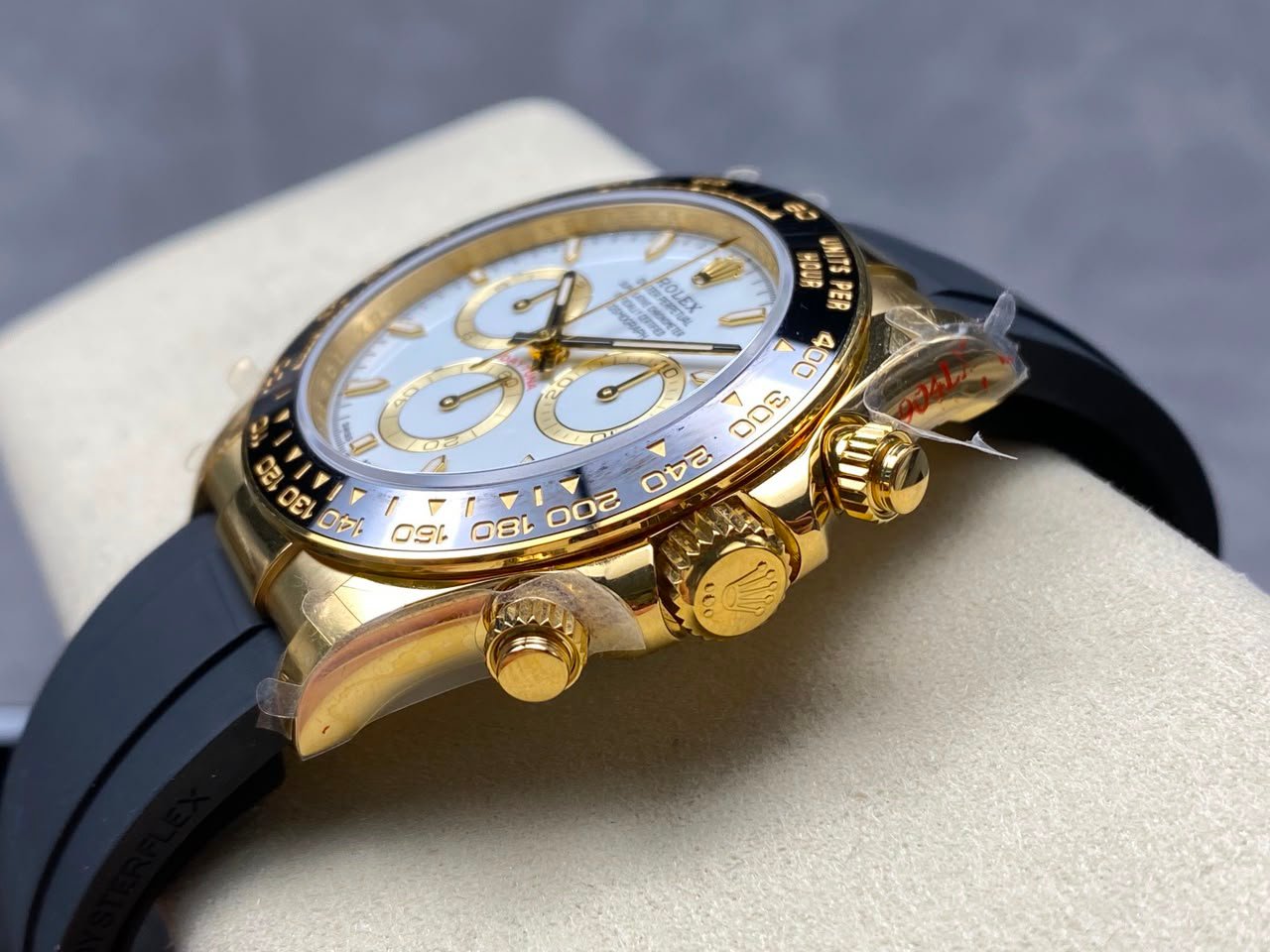
The 126518 combines a yellow-gold-tone case with a contrasting black rubber strap.
The supplied information focuses on the weighted construction but does not establish that the case itself is made from solid 18K gold.
For this reason, it is more accurate to describe the exterior as having a yellow-gold-tone finish unless the underlying material composition has been independently verified.
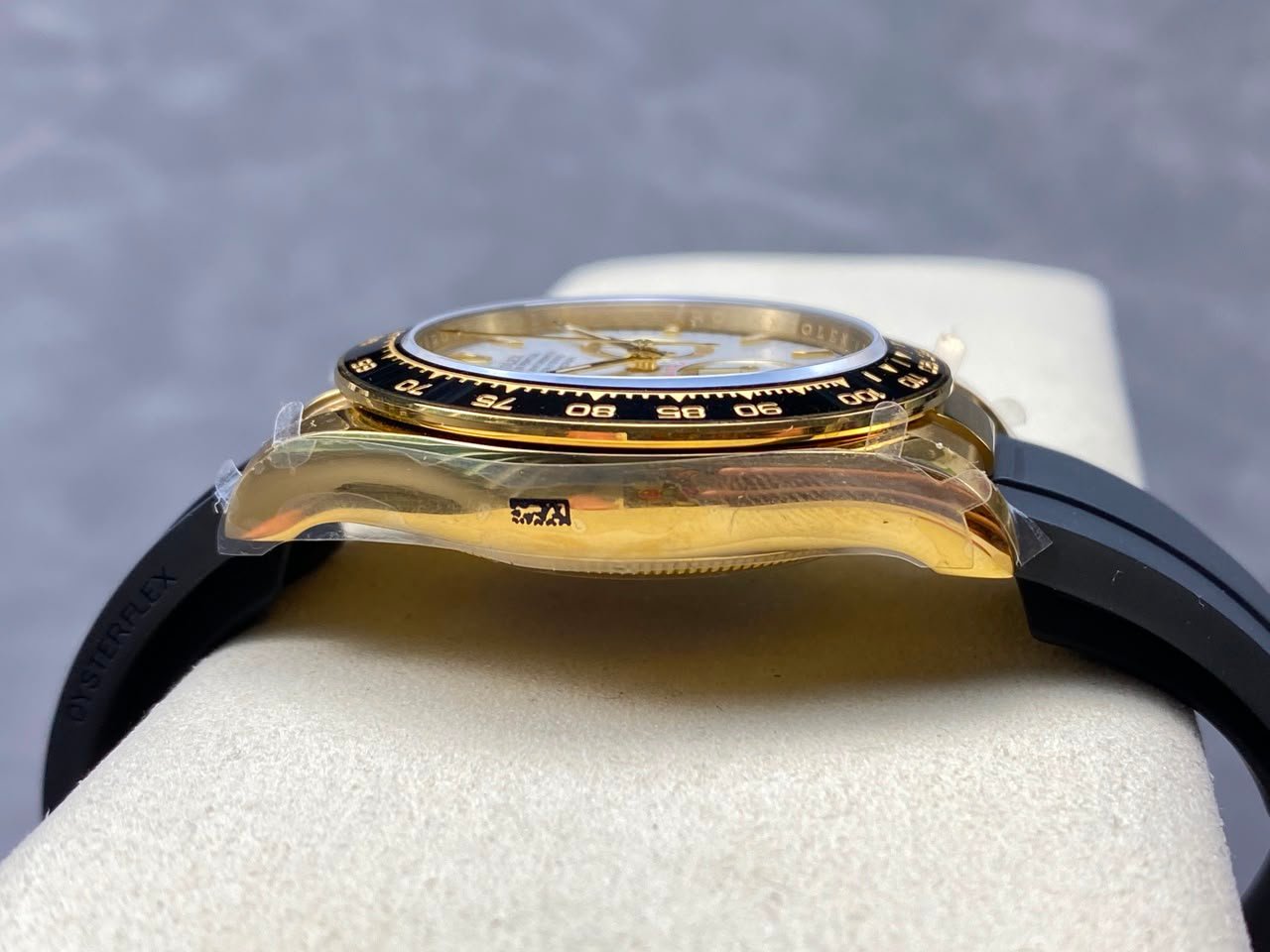
With this type of exterior treatment, the obvious front-facing surfaces are not the only areas worth looking at.
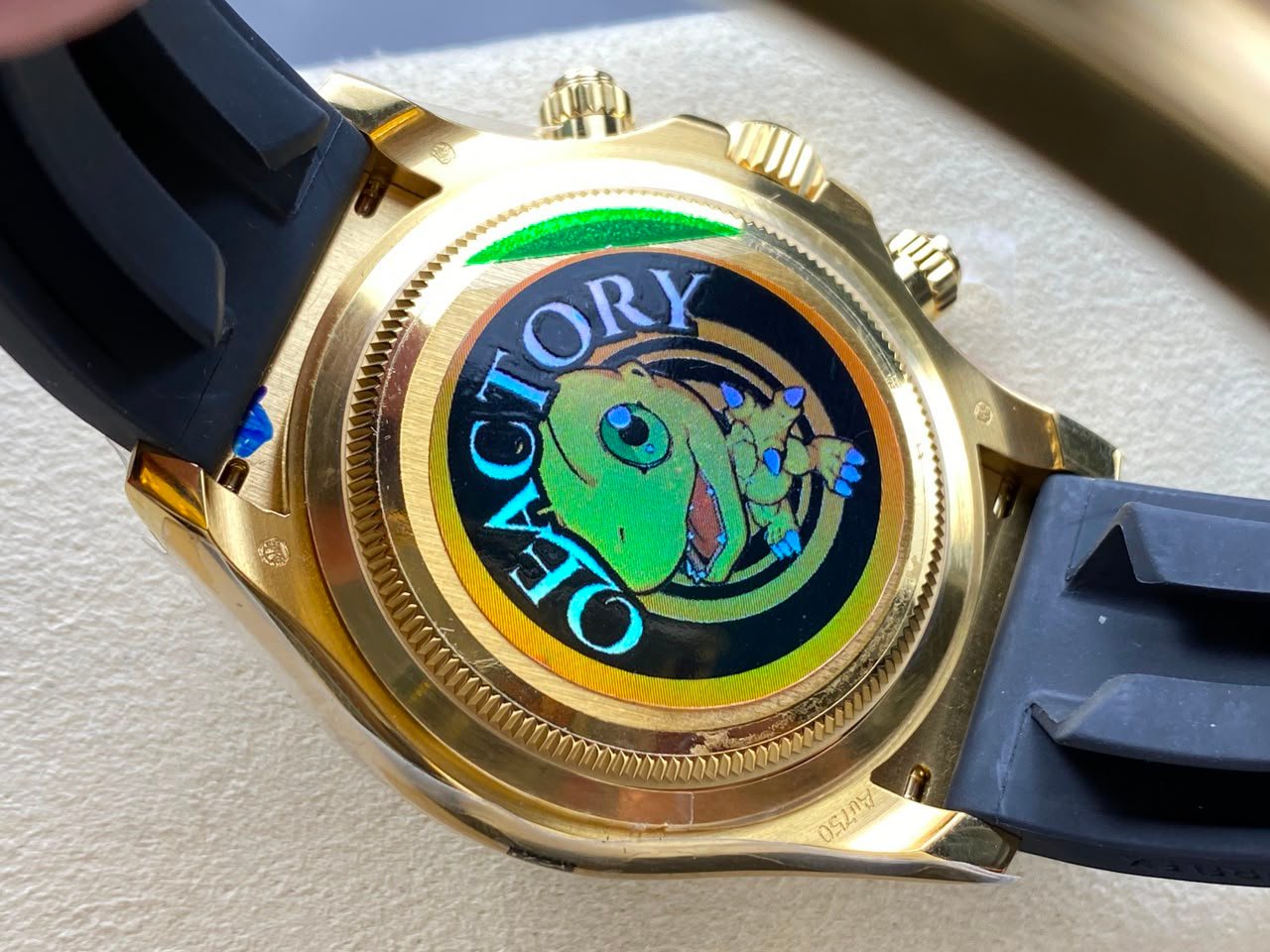
Close inspection around the case sides, lug edges, crown, chronograph pushers, caseback and strap connection points can provide a better picture of the overall finishing consistency.
Black Oysterflex-Style Rubber Strap
The black rubber strap creates one of the defining visual contrasts of the 126518.
Compared with a full yellow-gold-tone bracelet, the rubber configuration gives the watch a sportier appearance while placing greater visual emphasis on the case, bezel and dial.
The strap also has a significant influence on wrist fit.
Both sides should connect securely to the case, and the strap should sit naturally without unusual gaps or twisting around the attachment points.
Correct strap sizing is also important. The same watch head can feel very different depending on the selected strap length and wrist circumference.
Clasp and Strap Fit
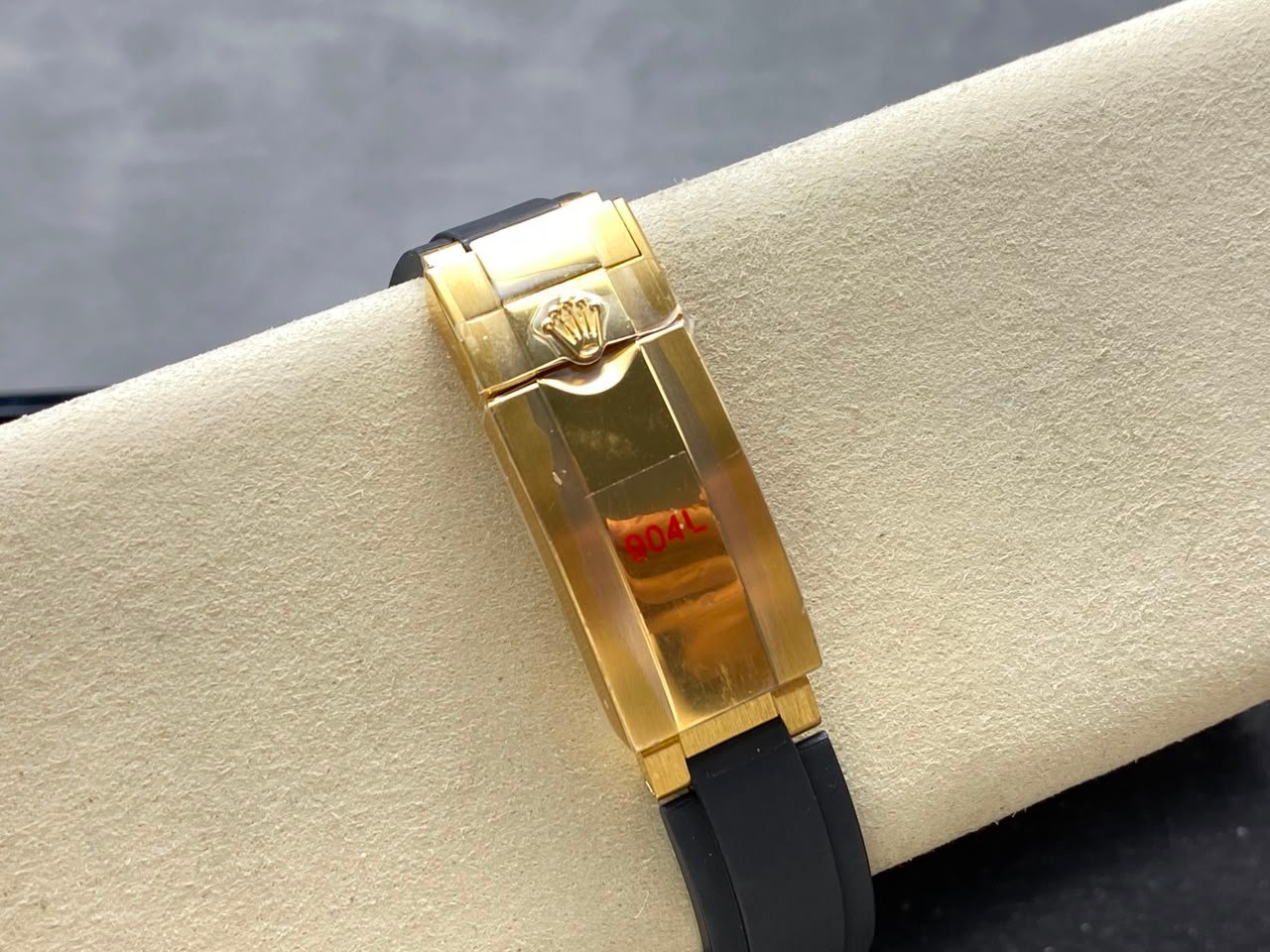
The clasp is another area worth checking during normal handling.
Opening and closing should feel consistent, and the locking mechanism should engage securely.
Because much of the 155g total mass is concentrated around the watch head, correct strap adjustment helps keep the watch centered on the wrist.
If the strap is too loose, the heavier watch head can move more noticeably than it would on a full bracelet.
4131-Style Free-Sprung Automatic Movement
Inside this QF Factory 126518 is a 4131-style automatic mechanical chronograph movement with a free-sprung balance architecture.
The free-sprung construction is one of the more technically interesting features of this version.
In a conventional regulated balance system, a regulator mechanism changes the effective working length of the hairspring.
A free-sprung architecture takes a different approach, with rate regulation handled through the balance system rather than a traditional regulator index.
This is an architectural difference worth identifying, but it should not be confused with guaranteed accuracy.
A free-sprung movement can still require proper regulation, and two individual movements of the same type can produce different timegrapher results.
Functional Chronograph
The 4131-style movement provides a functional mechanical chronograph.
Rather than simply checking whether the central chronograph seconds hand starts moving, it is better to test the complete sequence:
Start → Run → Stop → Reset
The chronograph should start normally, continue running consistently and stop correctly when the pusher is operated.
After reset, the chronograph hands should return cleanly to their zero positions.
Repeating this process several times provides a better indication of operation than performing a single start-and-reset test.
Chronograph Pushers
The screw-down chronograph pushers are another practical detail worth operating.
The locking collars should screw and unscrew normally, and the pushers should engage the chronograph without unusually heavy or inconsistent resistance.
The crown can also be tested for manual winding and time setting.
These small functional checks often tell us more about an individual watch than exterior photographs alone.
Why Free-Sprung Does Not Automatically Mean More Accurate
“Free-sprung” is sometimes treated as if it automatically means a movement will run more accurately.
That is not necessarily the case.
It describes the balance regulation architecture, not the final measured performance of an individual movement.
For this reason, we still look at actual movement measurements such as:
- Daily Rate
- Amplitude
- Beat Error
- Beat Rate
These figures provide a much clearer picture of how the individual movement is running at the time of testing.
Super Clone Watch and Actual Movement Performance
The term super clone watch is commonly used for watches with more developed case, movement and exterior construction, but it is still a broad market description rather than a defined technical standard.
For a Daytona like this, the more useful questions are quite specific:
Does the chronograph work correctly?
Does it reset accurately?
How is the movement running?
What is the actual weight?
How does the watch sit on the wrist?
These measurable details provide much more information than the category name alone.
For actual movement measurements, weight and physical checks from an individual example, see our QF Factory Daytona 126518 QC test.
What the 155g Figure Really Tells You
The approximately 155g specification is useful because weight is something that can be measured objectively.
But it should be interpreted correctly.
It tells us about the physical mass of this particular weighted configuration. It does not tell us whether the movement is running accurately, whether the chronograph is properly adjusted or whether the exterior finish is consistent.
This is why the 155g figure works best when considered together with actual movement and functional testing.
Details Worth Checking
When checking an individual QF Factory Daytona 126518, we would start by confirming the actual complete weight on a digital scale.
The exterior can then be inspected under neutral lighting, paying particular attention to the yellow-gold-tone finish around the case edges, crown, pushers, caseback and strap attachment points.
The rubber strap should sit securely against the case, while the clasp should open, close and lock correctly.
For the movement, useful measurements include daily rate, amplitude, beat error and beat rate.
The chronograph should then be tested through several complete start, stop and reset cycles.
Finally, manual winding, time setting and automatic winding can be checked as part of the overall functional inspection.
Technical Specifications
Specification Details
Factory QF Factory
Reference 126518 Series
Collection Daytona
Complete Weight Approx. 155g
Construction Weighted
Exterior Yellow-Gold-Tone
Strap Black Oysterflex-Style Rubber Strap
Movement 4131-Style Automatic Chronograph
Balance Architecture Free-Sprung
Chronograph Functional
Actual Weight Recommended to Confirm Individually
Frequently Asked Questions
- How much does the QF Factory Daytona 126518 weigh?
The supplied specification lists the complete watch at approximately 155g.
Because individual examples can vary slightly, the most useful approach is to confirm the complete weight on a digital scale.
- Why does 155g matter on a rubber-strap Daytona?
A rubber strap contributes considerably less weight than a full metal bracelet.
This means a larger proportion of the total 155g is concentrated around the watch head and weighted components, which can create a noticeably denser wrist feel.
- What movement does the QF Factory 126518 use?
This version is supplied with a 4131-style automatic mechanical chronograph movement using a free-sprung balance architecture.
- Does the free-sprung 4131 automatically run more accurately?
No.
Free-sprung describes the balance regulation architecture. Actual accuracy still depends on the individual movement and its regulation.
Daily rate, amplitude, beat error and beat rate should therefore still be measured.
- Is the QF 126518 made from solid 18K yellow gold?
The supplied information does not independently establish a solid 18K gold case.
For that reason, the exterior is more accurately described as yellow-gold-tone unless the underlying material composition is separately verified.
- What should be checked on the QF 126518 before shipment?
The most useful checks include actual weight, daily rate, amplitude, beat error, beat rate, chronograph start/stop/reset operation, crown operation, exterior finish, rubber-strap installation and clasp operation.