THB Factory AP Royal Oak 15416 V2 – Black Ceramic Openworked Guide
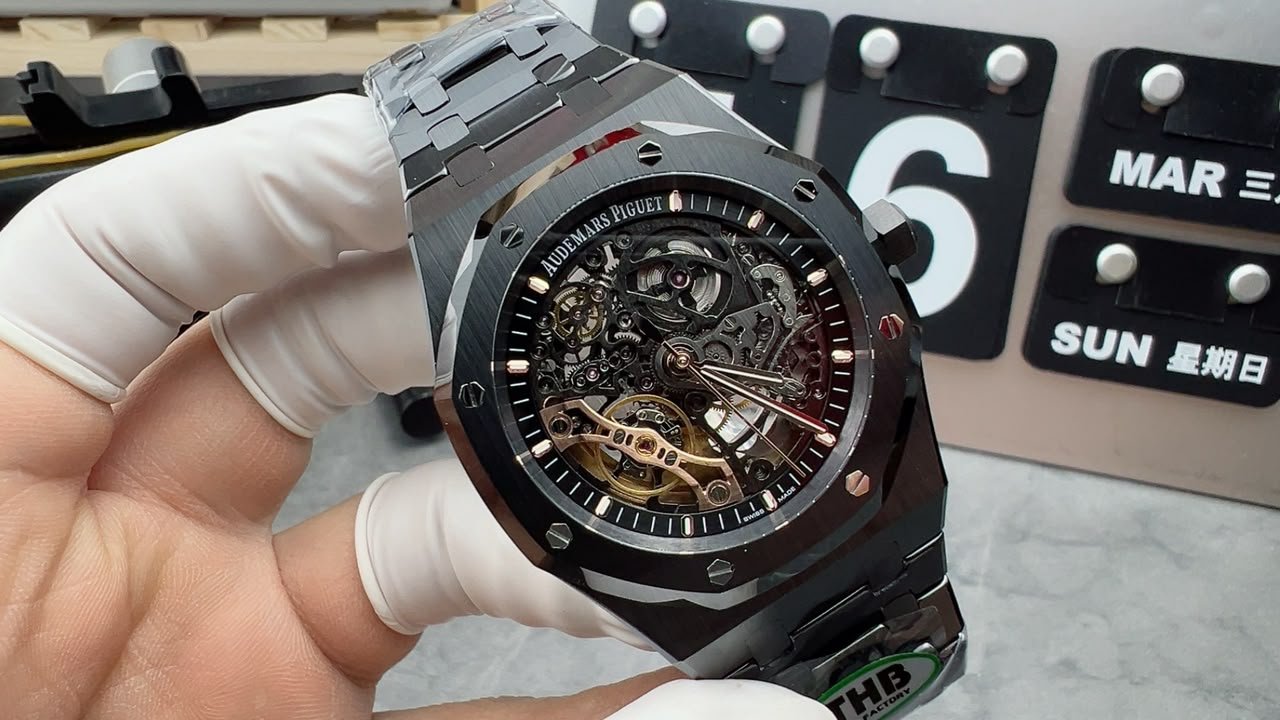
The THB Factory Audemars Piguet Royal Oak 15416 V2 is a black ceramic openworked configuration built around a ceramic case, ceramic bracelet and an integrated-style mechanical movement visible through both the dial and transparent caseback.
Unlike a conventional Royal Oak with a solid dial, the 15416 places the movement architecture at the center of the design.
The openworked construction exposes the balance assembly, bridges and moving gear components, making movement layout and finishing much more visually important.
The supplied V2 specifications also identify a 10.1mm case thickness, full ceramic crown, redesigned case construction and ceramic folding clasp.
Full Black Ceramic Construction
One of the defining characteristics of this THB 15416 is its extensive use of black ceramic.
The supplied configuration uses ceramic for both the case and integrated bracelet rather than relying on a conventional steel case with a black surface coating.
That distinction is important.
With a solid ceramic component, the dark appearance comes from the material itself rather than simply from a black coating applied over stainless steel.
This generally provides strong resistance to everyday surface scratching, although ceramic should not be described as indestructible. A sufficiently strong impact can still chip, crack or damage a ceramic component.
Ceramic Case Finishing
The Royal Oak case depends heavily on the interaction between geometry and surface finishing.
Its octagonal bezel, sharply defined edges and integrated bracelet create numerous surfaces that reflect light differently.
For a black ceramic version, useful areas to examine include:
- Bezel brushing
- Bezel edges
- Case sides
- Lug transitions
- Bracelet links
- Link edges
- Clasp
- Caseback transition
Angled photographs are particularly useful because they show the direction and consistency of the finishing more clearly than a straight front view.
Octagonal Bezel and Eight Screws
The Royal Oak’s octagonal bezel is secured visually by eight exposed hexagonal-style screws.
These components form part of the recognizable geometry of the watch.
Because the bezel has such a simple and symmetrical shape, small differences in positioning become relatively easy to notice.
Useful inspection points include screw positioning, recess depth, surrounding edges and the consistency of the brushed bezel surface.
The supplied information references additional steel screws elsewhere in the case construction. Those components should be documented separately from the ceramic exterior rather than describing the complete watch as being made exclusively from ceramic.
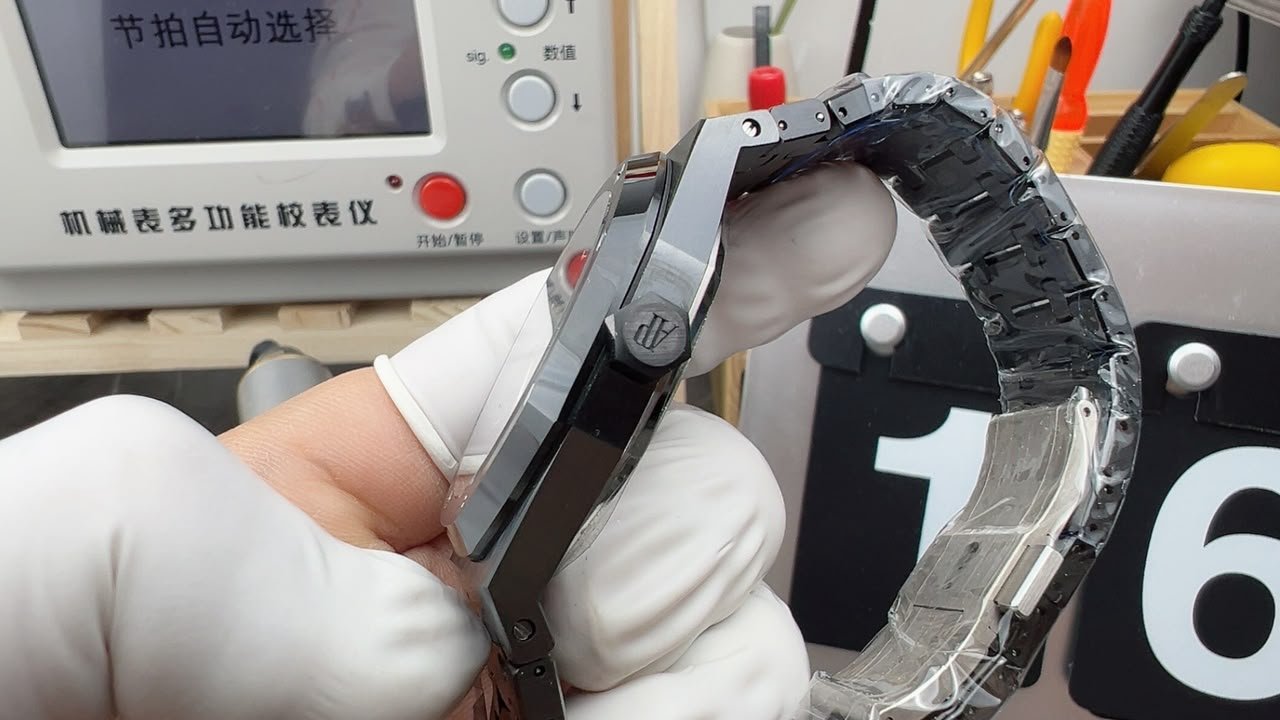
10.1mm Case Thickness
The supplied V2 specification lists the case thickness at approximately 10.1mm.
Thickness is particularly important on an integrated-bracelet Royal Oak because it affects both the side profile and how closely the case sits against the wrist.
A 10.1mm figure is useful as a reference, but an individual watch should still be measured with a digital caliper.
For QC documentation, recording the actual thickness alongside the weight and case width creates a much more useful physical record than relying only on the model specification.
Openworked Architecture
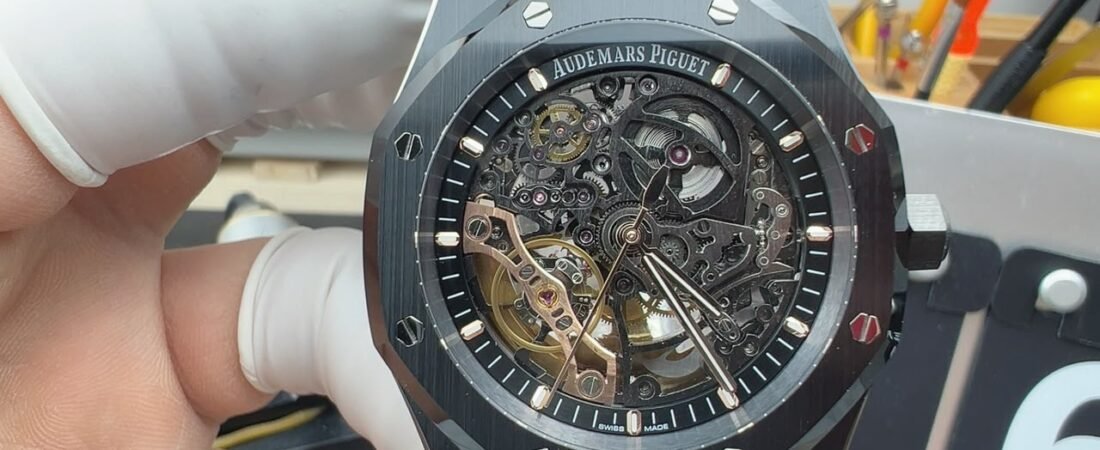
The 15416 differs significantly from a conventional Royal Oak because the dial area exposes much of the movement.
Instead of a traditional solid dial, the openworked structure allows the wearer to see mechanical components from the front.
This means the movement is both a functional mechanism and a major part of the watch’s visual design.
Visible areas include:
Balance Assembly → Bridges → Gear Components → Openworked Plates
Because there is relatively little dial surface hiding the movement, finishing consistency becomes especially noticeable.
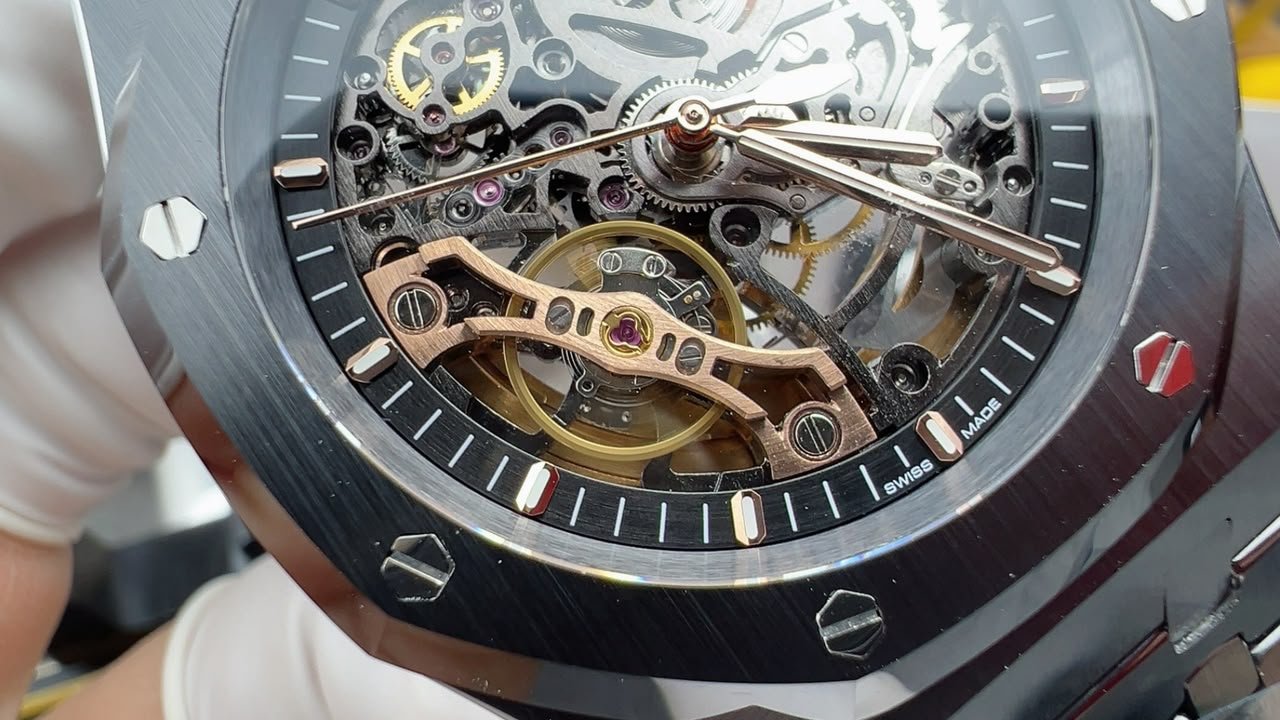
Visible Balance at Approximately 8 O’Clock
One of the most recognizable features of this THB configuration is the visible balance assembly positioned around the 8 o’clock area.
When the watch is running, the oscillating balance provides an obvious mechanical focal point through the front of the watch.
The supplied V2 information describes an updated balance construction.
Rather than treating the visual appearance of the balance as proof of a particular original caliber architecture, it is more useful to document its position, operation and surrounding bridge structure.
A short macro video is particularly useful here because still photography cannot fully show the movement of the balance and adjacent components.
Integrated-Style Openworked Movement
The THB 15416 V2 is supplied with a custom integrated-style openworked mechanical movement.
This description is more useful than calling it an “original movement” or claiming complete interchangeability with genuine movement components.
An integrated-style construction means the visible movement architecture forms the working mechanical platform rather than simply presenting a decorative openworked plate over an unrelated movement appearance.
For technical documentation, however, visual similarity and actual mechanical architecture should still be evaluated separately.
Functional Gear Components
Because much of the movement is exposed, individual moving components can be observed while the watch is operating.
The visible balance and gear train create the mechanical appearance that defines an openworked watch.
During inspection, useful points include:
- Balance operation
- Visible gear movement
- Hand clearance
- Bridge alignment
- Movement finishing
- Automatic winding operation
- Crown operation
The fact that a component visibly moves does not by itself establish long-term movement performance, so timegrapher testing remains useful.
Movement Testing
For an individual THB 15416 V2, useful movement measurements include:
Daily Rate → Amplitude → Beat Error → Beat Rate
These provide actual data about the running condition at the time of testing.
Manual winding and time setting should also be checked separately.
Because this is an openworked watch, a movement video can be added to the QC record alongside the timegrapher results. That provides both visual evidence of the movement operating and numerical data from the test.
Full Ceramic Crown
The supplied V2 configuration also identifies a ceramic crown.
This maintains the black exterior appearance across another component that is frequently handled.
The crown logo and exterior engraving can be examined under macro photography, but functional testing is equally important.
The crown should engage the available winding and time-setting positions normally without unusual resistance.
Case Side Construction
The supplied information references five side components/screws with hexagonal geometry as part of the case construction.
These are useful details to photograph because the Royal Oak’s side profile is often less documented than the front.
A side photograph can show the relationship between:
Bezel → Middle Case → Side Components → Caseback → Bracelet
It also provides a clearer view of the 10.1mm overall thickness.
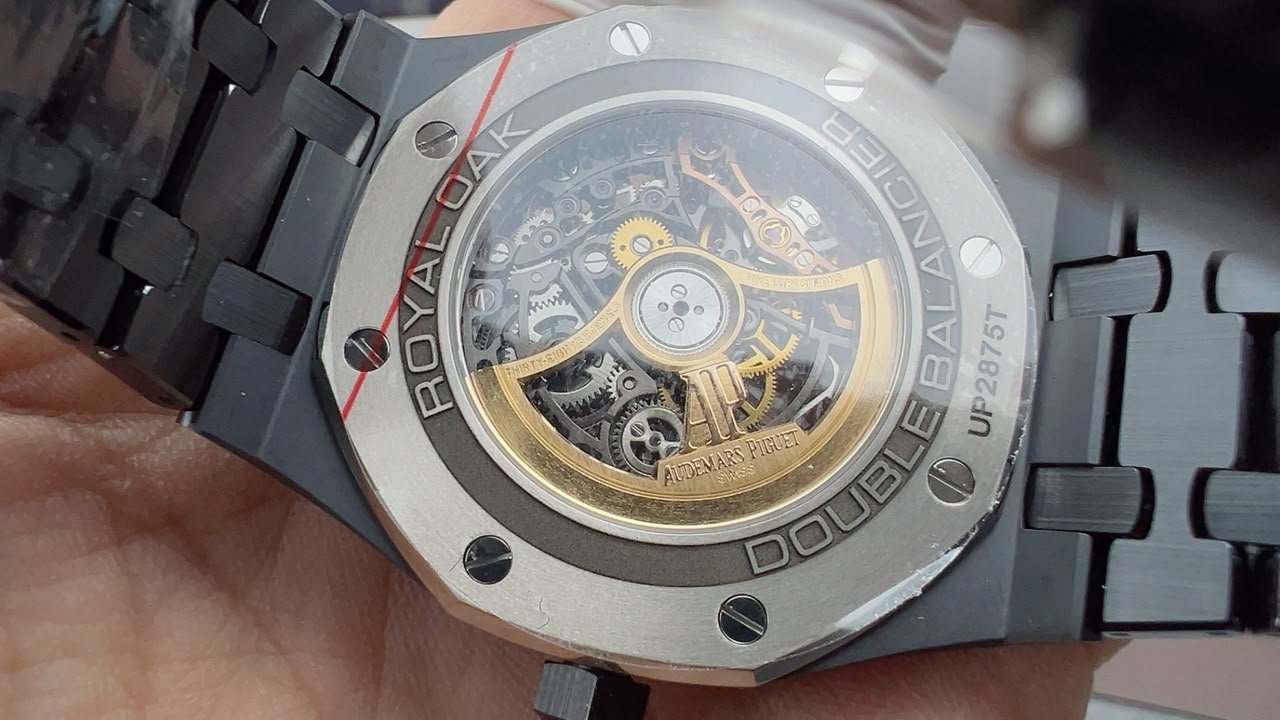
CNC-Engraved Caseback
The V2 information highlights revised CNC caseback engraving.
For a technical article, the useful characteristics are engraving depth, positioning, character definition and consistency rather than claims that the engraving is identical to another watch.
Macro photography can document:
- Reference markings
- Serial-style markings
- Logo
- Letter depth
- Character spacing
- Caseback surface finishing
Because serial-style markings can vary between production batches, they should not automatically be interpreted as unique manufacturer-issued serial numbers.
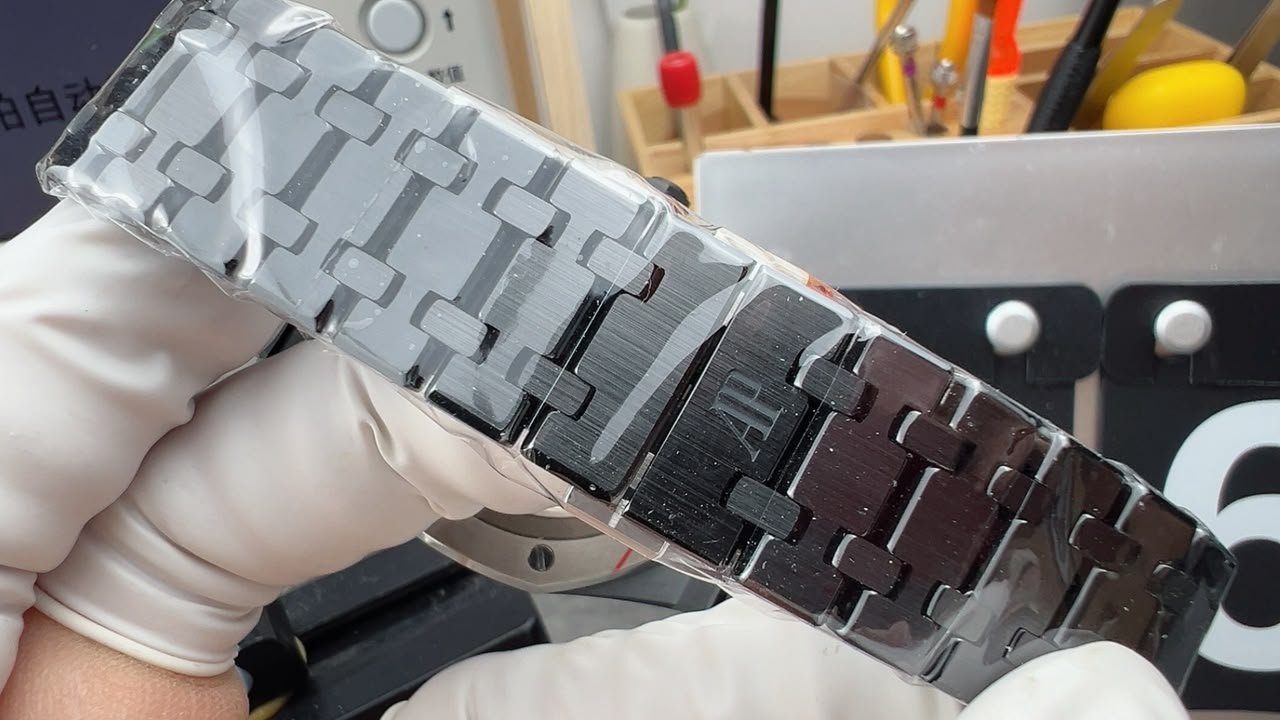
Ceramic Bracelet
The integrated black ceramic bracelet is another important part of this configuration.
Royal Oak bracelets contain numerous individual surfaces and edges, making their finishing considerably more complex than a simple rubber or leather strap.
Useful areas to inspect include:
- Individual link articulation
- Brushed surfaces
- Edge definition
- Link gaps
- Case-to-bracelet transition
- Bracelet underside
- Clasp operation
Ceramic bracelet links should articulate naturally without unusual binding.
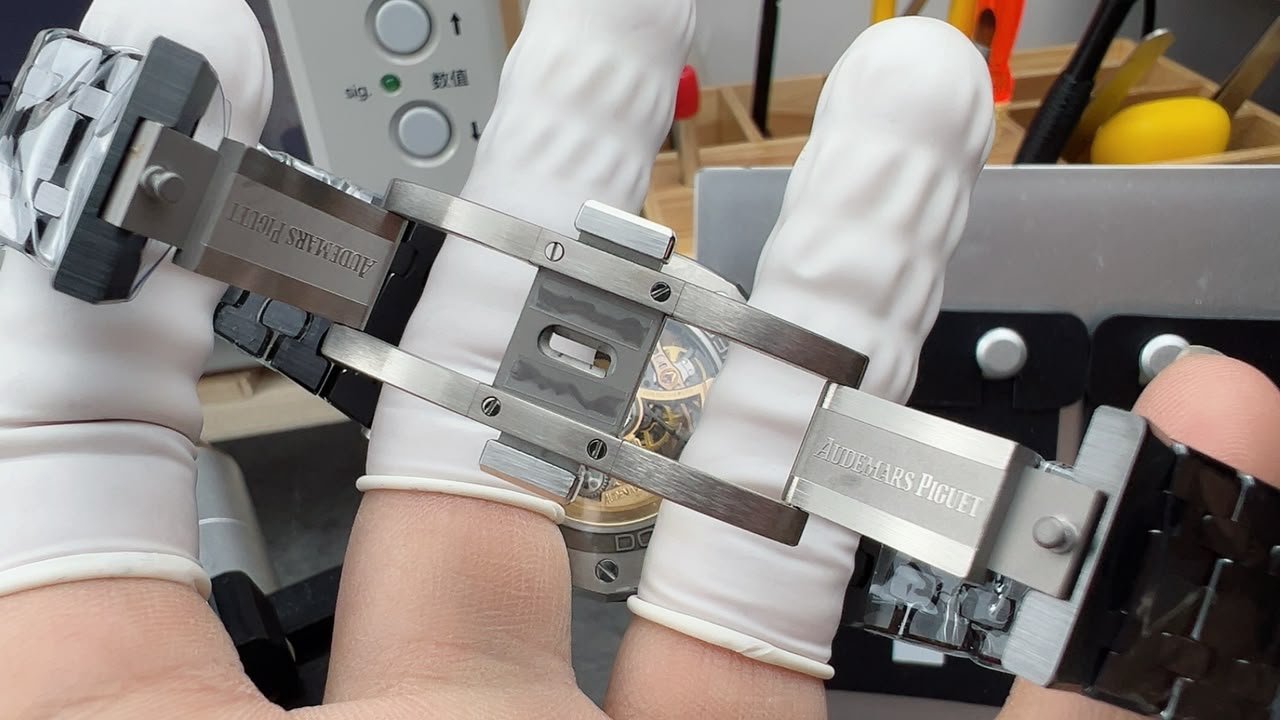
Ceramic Folding Clasp
The supplied V2 specifications also reference a redesigned ceramic folding clasp with three-dimensional logo detailing.
Because the clasp is handled frequently, both visual and mechanical checks are useful.
Opening and closing should feel consistent, and the clasp should lock securely.
Macro photographs can document the logo, ceramic surface and surrounding hardware.
Steel Screw Components
Although the primary exterior construction is ceramic, the supplied information identifies 316L stainless-steel screw components.
This is an important distinction for the database.
Rather than recording the watch simply as “100% ceramic,” the more accurate material classification is:
Primary Exterior: Black Ceramic
Selected Hardware: 316L Stainless Steel
This gives readers a clearer understanding of the actual construction.
Super Clone Watch and Openworked Movement Evaluation
The term super clone watch is commonly used for higher-specification replica watches, but it is not a standardized technical grade.
That distinction becomes particularly important with an openworked watch.
A static photograph may show the general appearance of the movement, but it cannot establish how the individual movement actually performs.
For the THB 15416 V2, more useful information comes from combining movement architecture, timegrapher measurements, actual dimensions, weight and functional testing.
For real measurements from an individual example, see our THB Factory AP Royal Oak 15416 V2 QC test.
Details Worth Checking
For an individual THB 15416 V2, the actual case dimensions, 10.1mm stated thickness and complete weight should be measured first.
The black ceramic case and bracelet can then be photographed under angled lighting to document brushing, edges and surface consistency.
The openworked movement should be recorded while running, with particular attention to the visible balance around 8 o’clock and the movement of exposed gear components.
Movement testing can then record daily rate, amplitude, beat error and beat rate.
Finally, the ceramic crown, bracelet articulation, folding clasp, caseback engraving and steel screw components can be inspected individually.
Technical Specifications
Specification Details
Factory THB Factory
Version V2
Collection AP Royal Oak
Reference 15416 Series
Exterior Black Ceramic
Case Integrated Ceramic Construction
Stated Thickness Approx. 10.1mm
Bracelet Integrated Black Ceramic
Clasp Ceramic Folding Clasp
Crown Ceramic
Bezel Octagonal Ceramic
Bezel Hardware Eight Hexagonal-Style Screws
Selected Hardware 316L Stainless Steel
Movement Integrated-Style Openworked Mechanical Movement
Balance Position Approx. 8 O’Clock
Caseback Transparent / CNC-Engraved Surround
Dial Architecture Openworked / Skeletonized
FAQ
- Is the THB Factory AP 15416 V2 made from black ceramic?
The supplied configuration uses black ceramic for the primary case and bracelet components, while selected hardware such as screws is specified as 316L stainless steel.
- How thick is the THB 15416 V2?
The supplied specification lists approximately 10.1mm. Actual thickness is best confirmed with a digital caliper on the individual watch.
- Is black ceramic impossible to scratch or damage?
No. Ceramic offers strong resistance to normal surface scratching, but it should not be described as indestructible. Strong impacts can still chip or crack ceramic components.
- What movement does the THB 15416 V2 use?
It uses a custom integrated-style openworked mechanical movement with the visible balance positioned around the 8 o’clock area.
- Is the movement just a decorative skeleton plate?
The supplied V2 information describes an integrated-style openworked construction with visible operating mechanical components. The best way to document an individual example is through a movement video combined with timegrapher testing rather than relying only on its visual appearance.
- What should be checked during QC?
Useful checks include actual thickness and weight, daily rate, amplitude, beat error, beat rate, visible balance operation, gear movement, hand clearance, ceramic finishing, bracelet articulation, crown operation, clasp security and caseback engraving.