Clean Factory Rolex GMT-Master II V3 3285 Movement & Bezel Guide
The Clean Factory Rolex GMT-Master II platform combines 904L stainless-steel construction, a V3 two-tone ceramic bezel and a Dandong 3285-style automatic GMT movement.
For technical documentation, two areas are particularly useful to examine separately: the V3 ceramic bezel construction and the 3285-style GMT movement architecture.
The bezel can be evaluated through its color transition, engraving, numeral filling and surface finishing, while the movement can be documented through its GMT operation, crown-setting sequence, power reserve and Timegrapher results.
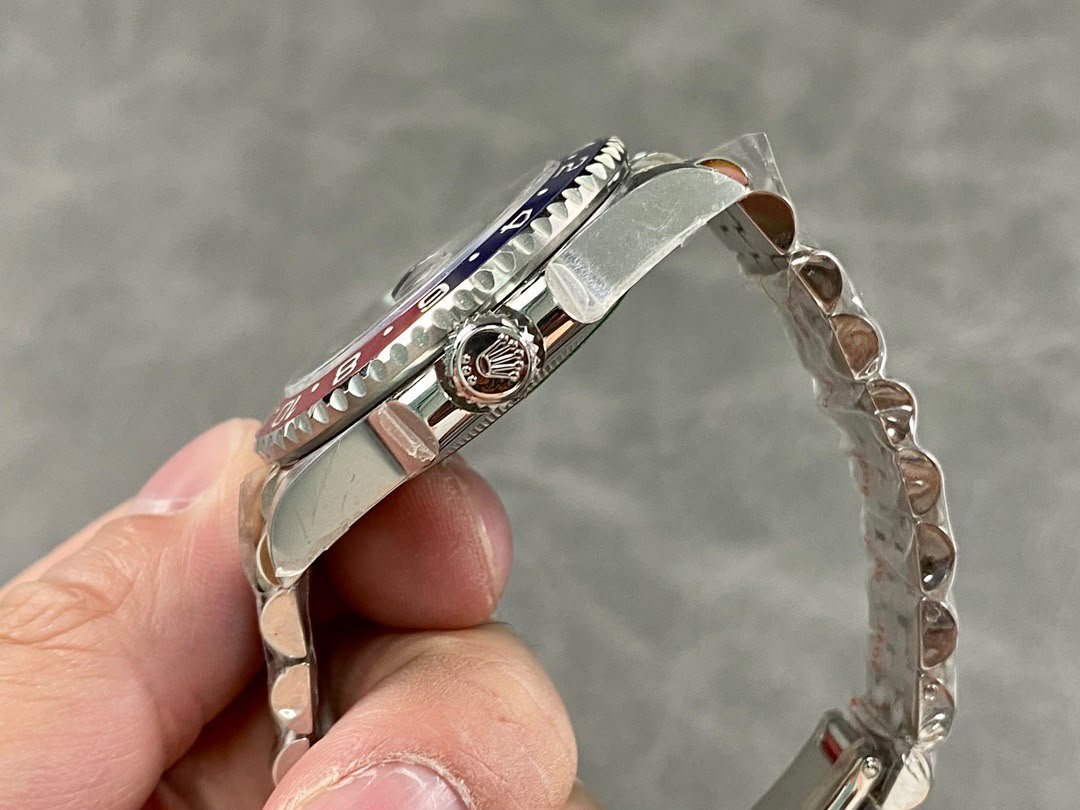
V3 Two-Tone Ceramic Bezel
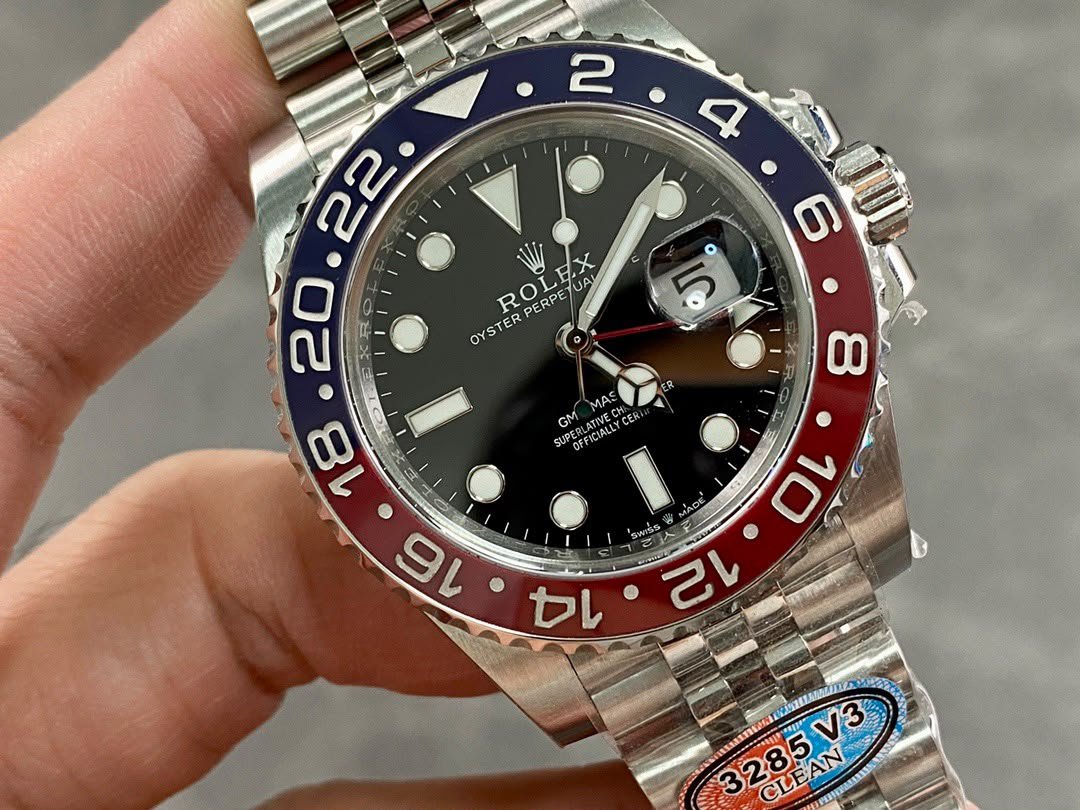
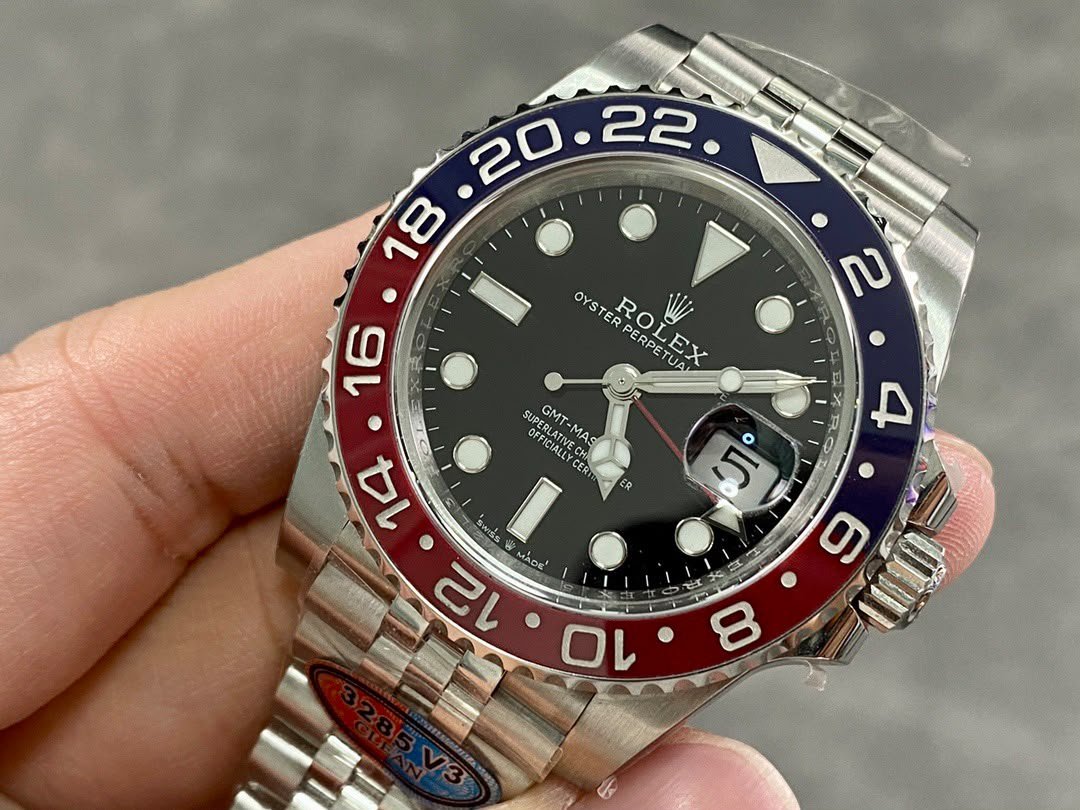
One of the defining components of this Clean Factory GMT configuration is the V3 two-tone ceramic bezel insert.
According to the supplied production information, the two-color insert is manufactured using a high-temperature integrated ceramic process rather than being documented simply as two separately assembled colored sections.
For a technical database, the useful classification is:
Clean Factory → GMT-Master II → V3 Two-Tone Ceramic Bezel
This also makes it possible to compare V3 with earlier Clean Factory bezel generations without creating duplicate general GMT articles.
Two-Tone Ceramic Color Transition
The transition between the two colors is one of the most useful areas to document on a two-tone GMT bezel.
Macro photography should focus on the transition zones from several angles.
Useful inspection points include:
- Transition boundary
- Color consistency
- Ceramic surface texture
- Engraved numerals
- Minute markings
- 12 o’clock triangle
- Numeral filling
The color should ideally be photographed under neutral lighting because ceramic appearance can change considerably with white balance, exposure and surrounding reflections.
High-Temperature Ceramic Process
The supplied version information describes the V3 insert as using a high-temperature integrated firing process.
This can be retained as production information, but the technical article should avoid turning the manufacturing claim into an independently verified conclusion unless additional production evidence is available.
For the database:
Supplied Manufacturing Specification: High-Temperature Integrated Ceramic Process
is more precise than describing the bezel as automatically superior because of the process.
Bezel Engraving
The supplied information also emphasizes the engraving and background texture of the bezel markings.
These are particularly suitable for macro documentation.
Instead of simply describing the engraving as “more refined,” useful photographs can compare:
Numeral Shape → Engraving Edge → Engraving Depth → Surface Texture → Filling Consistency
Multiple numerals should be photographed because one small area does not necessarily represent the entire insert.
24-Hour GMT Bezel
The bezel is not only an exterior component.
Together with the GMT hand, its 24-hour scale provides the reference used for reading an additional time zone.
For QC, bezel operation should therefore include:
- Rotation
- Click consistency
- Resistance
- Back play
- Alignment
- 12 o’clock positioning
- GMT scale readability
A short rotation video is useful evidence for an individual QC record.
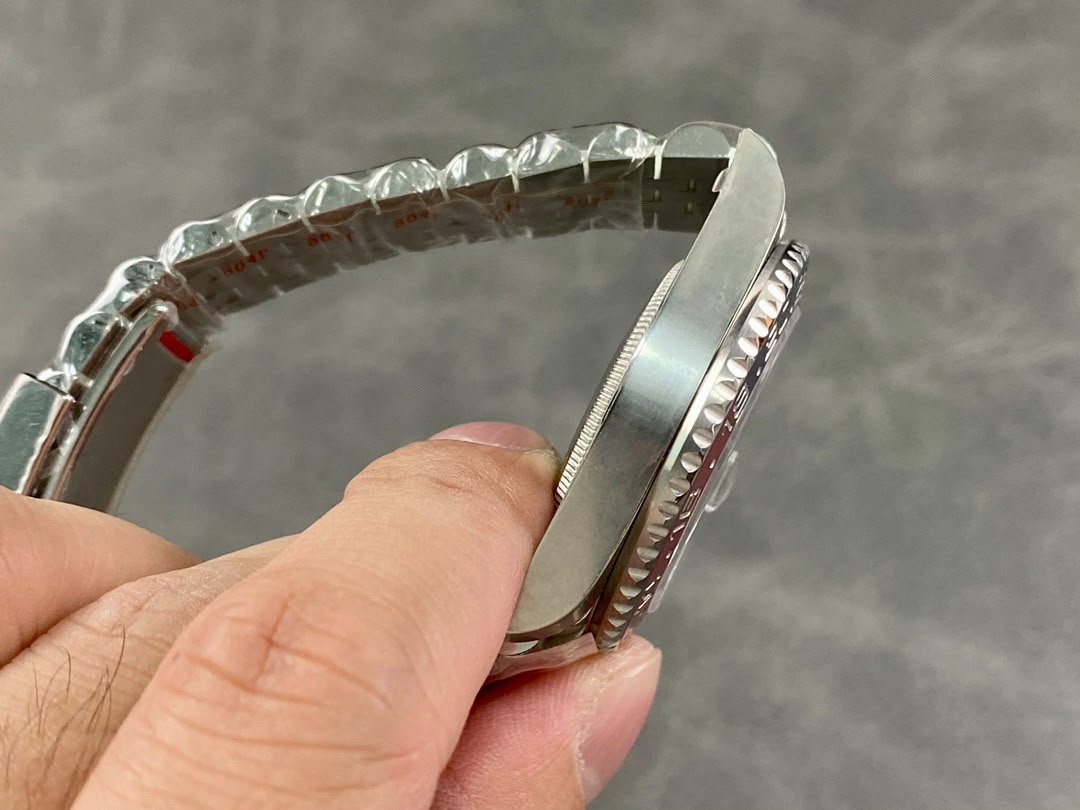
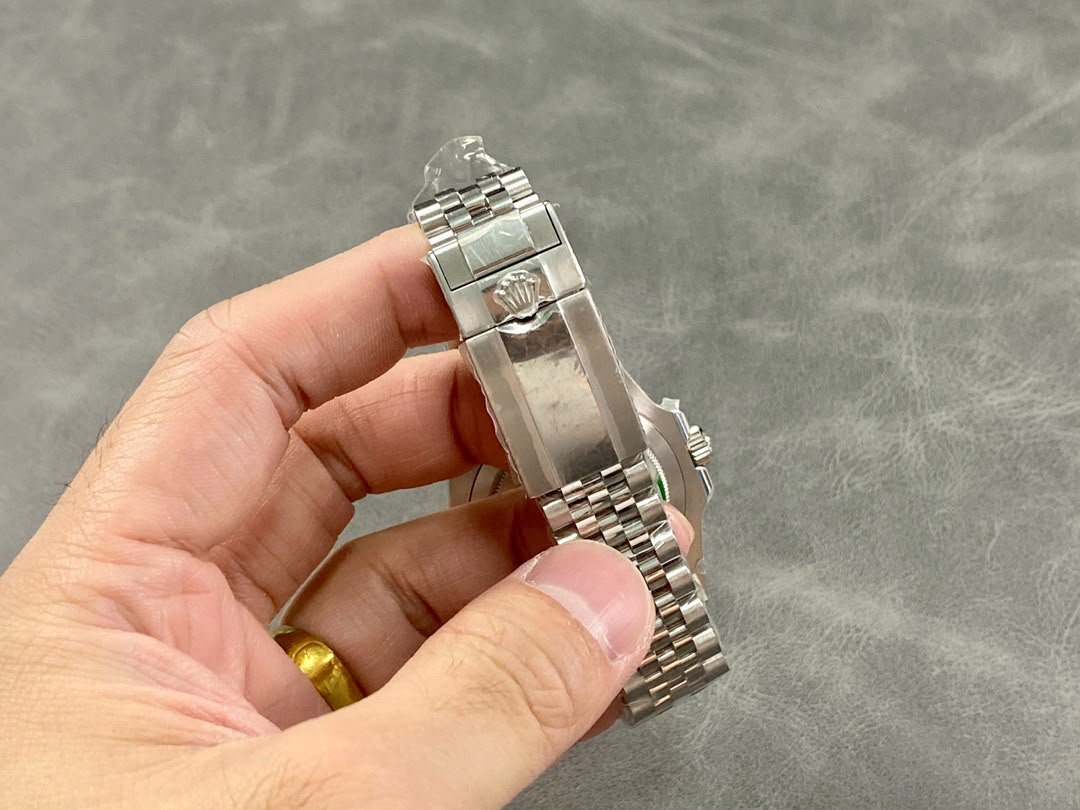
904L Stainless-Steel Construction
The supplied configuration identifies 904L stainless steel as the case and bracelet material.
Useful exterior inspection areas include the case, lugs, crown, bracelet, end links and clasp.
For individual QC records, the physical specifications should also be measured:
Case Width → Thickness → Complete Weight
These measurements allow later Clean GMT production examples to be compared using actual data rather than relying solely on nominal specifications.
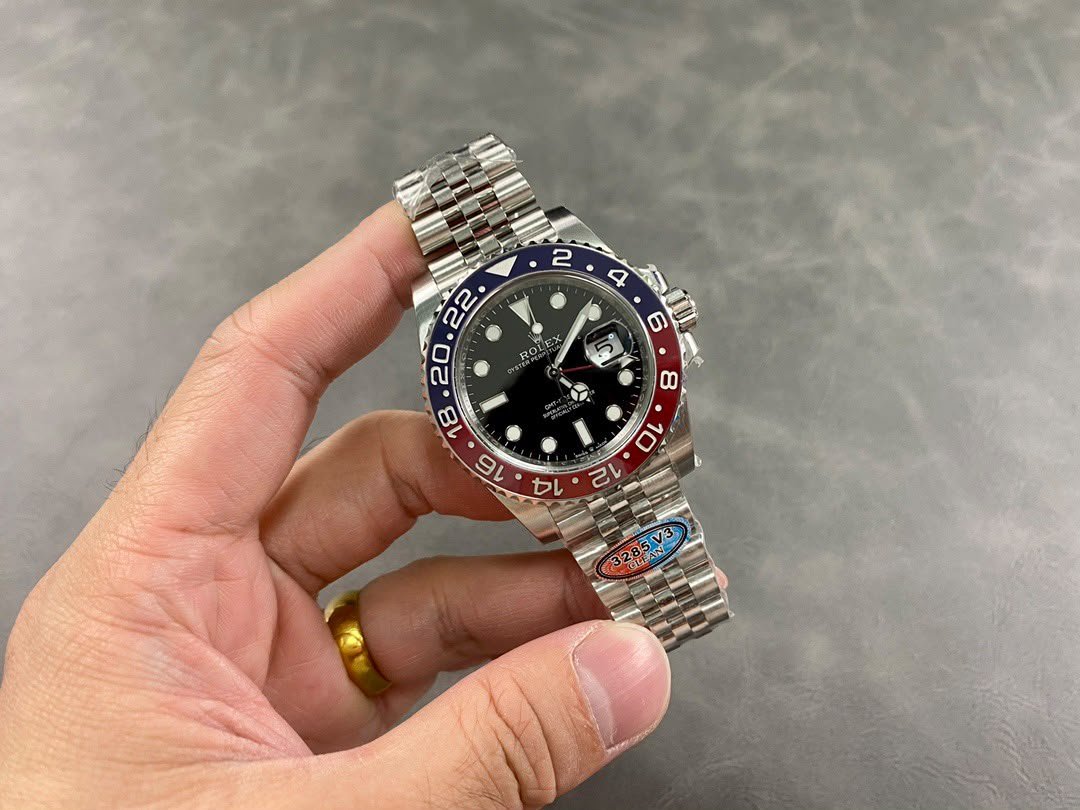
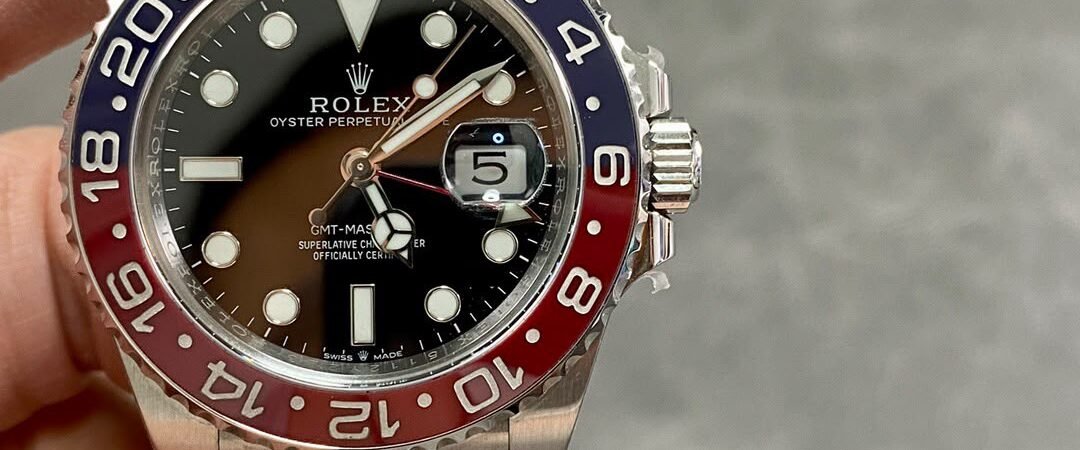
Dial and Applied Hour Markers
The supplied configuration uses applied hour markers with luminous material.
Useful macro inspection areas include:
- Marker positioning
- Marker edges
- Dial printing
- Hand alignment
- GMT hand
- Date window
- Luminous filling
A straight front photograph is particularly useful for checking the relationship between the dial, hands, date and bezel.
Lume Testing
Rather than relying on the origin of the luminous compound as a quality indicator, the actual luminous performance can be documented.
A controlled test can compare:
Hour Markers → Hour Hand → Minute Hand → GMT Hand
All components should be charged using the same light source for the same period before photography.
This gives your database first-hand evidence from the actual watch.
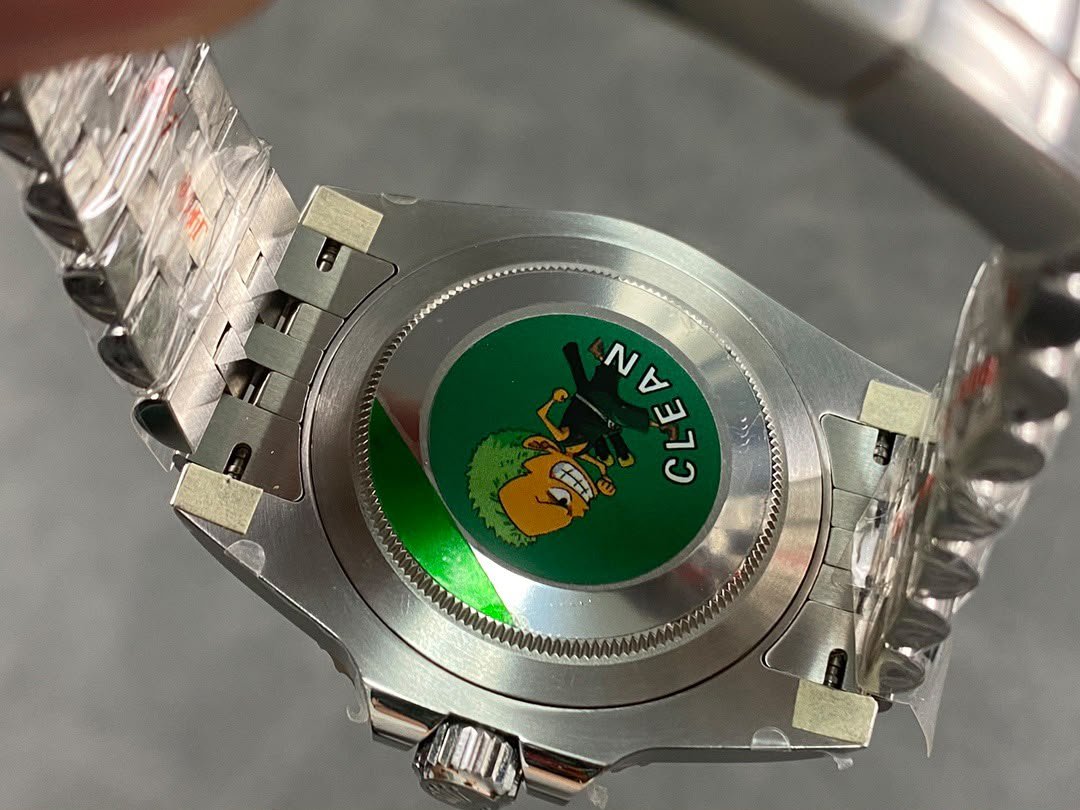
Dandong 3285-Style Integrated GMT Movement
The supplied Clean Factory GMT configuration uses a Dandong 3285-style integrated automatic GMT movement.
For database accuracy, this should not be described as a genuine Rolex Calibre 3285.
The useful classification is:
Dandong 3285-Style Integrated Automatic GMT Movement
The word integrated is important because the GMT function forms part of the movement architecture rather than simply being described as a cosmetic movement modification.
GMT Function
A GMT movement requires more functional testing than a conventional three-hand movement.
For an individual QC example, the useful sequence includes:
Manual Winding → Crown Positions → Time Setting → Local-Hour Adjustment → GMT-Hand Operation → Date Change → Automatic Winding
This is especially important because a movement can show acceptable Timegrapher readings while still having an issue with one of its GMT or calendar functions.
Independent Local-Hour Function
One of the important characteristics to document on a 3285-style GMT architecture is the operation of the local hour hand.
Rather than testing only whether the GMT hand moves, QC should document how the local-hour adjustment interacts with:
Local Hour → GMT Hand → Date
A short video is particularly useful because it demonstrates the actual crown-setting sequence much more clearly than a written specification.
Date Operation
The date should be checked through several consecutive changes.
Useful inspection areas include:
- Date centering
- Numeral printing
- Date change
- Local-hour/date interaction
- Cyclops alignment
Testing several dates is preferable to judging the calendar using a single numeral.
Movement Testing
Every individual Dandong 3285-style movement should be tested separately.
Useful Timegrapher data includes:
Daily Rate → Amplitude → Beat Error → Beat Rate
These figures describe the movement’s condition during the test rather than guaranteeing future performance.
If possible, actual power reserve should also be measured independently.
Power Reserve
The 3285-style platform is commonly associated with extended power-reserve configurations, but for your technical database I recommend separating claimed specifications from measured results.
A much stronger QC article would record:
Fully Wound Time → Stop Time → Actual Measured Power Reserve
If an individual example measures close to the stated figure, that becomes your own first-hand database result.
Super Clone Watch and Clean GMT Technical Data
The term super clone watch is commonly used in the replica-watch market, but it is not a standardized technical grade.
For the Clean Factory GMT-Master II, more useful information comes from identifying the actual configuration: V3 two-tone ceramic bezel, 904L steel construction, Dandong 3285-style integrated GMT movement, GMT operation and individual QC measurements.
For actual measurements and movement performance from a specific reference, see the relevant Clean Factory Rolex GMT-Master II QC Test.
Technical Specifications
Specification Details
Factory Clean Factory
Collection Rolex GMT-Master II
Bezel Version V3
Bezel Two-Tone Ceramic
Ceramic Process High-Temperature Integrated Process, per supplied specification
Case / Bracelet Material 904L Stainless Steel
Movement Dandong 3285-Style
Movement Type Integrated Automatic GMT
GMT Function Yes
Date Yes
Luminous Markers Yes
Reference Depends on Specific GMT Configuration
Actual Thickness Record During QC
Actual Weight Record During QC
Actual Power Reserve Recommended to Measure
FAQ
- What movement does the Clean Factory GMT-Master II use?
The supplied configuration uses a Dandong 3285-style integrated automatic GMT movement.
- Is the Dandong 3285 an original Rolex 3285?
No. It should be documented as a 3285-style replica movement, not a genuine Rolex-manufactured Calibre 3285.
- What is the Clean Factory V3 bezel?
The supplied configuration identifies V3 as an updated two-tone ceramic GMT bezel produced using a high-temperature integrated ceramic process.
- What should be checked on a two-tone ceramic GMT bezel?
Useful areas include the color transition, engraving, numeral filling, surface texture, 12 o’clock alignment and bezel rotation.
- What functions should be tested on the 3285-style GMT movement?
QC should test manual winding, crown positions, time setting, local-hour adjustment, GMT-hand operation, date operation and automatic winding, in addition to Timegrapher testing.
- What data should an individual QC article include?
A useful QC record should contain daily rate, amplitude, beat error, beat rate, actual case dimensions, thickness, weight, GMT operation, date operation, bezel alignment and preferably measured power reserve.