THB Factory AP Royal Oak 15416CE Black Ceramic Free-Sprung Movement Guide
The THB Factory AP Royal Oak 15416CE is an openworked mechanical watch featuring a black ceramic case and bracelet, a free-sprung-style balance assembly and an exposed movement architecture.
According to the supplied production specifications, the case measures approximately 10.1mm in thickness, while the visible balance assembly is positioned near 8 o’clock.
This configuration combines three important technical characteristics: a ceramic exterior, an openworked mechanical movement and a free-sprung balance system.
Unlike conventional Royal Oak configurations with closed dials, the 15416CE exposes a substantial portion of its mechanical construction, making movement layout, component finishing and balance operation central to its design.
Black Ceramic Case and Bracelet Construction
The THB 15416CE uses black ceramic for its principal exterior components, including the case and integrated bracelet.
Ceramic is valued in watchmaking for its surface hardness, scratch resistance and ability to maintain a consistent appearance under normal wearing conditions.
However, ceramic should not be described as indestructible. Although resistant to many forms of surface scratching, it can chip or fracture when subjected to sufficiently strong impacts.
The supplied THB configuration describes a revised case construction that eliminates a separate metal inner case insert.
This is a relevant structural distinction because the internal case design can affect assembly, thickness and the relationship between the movement and ceramic exterior.
The exact construction should be distinguished from the external appearance of the watch.
Royal Oak Octagonal Bezel
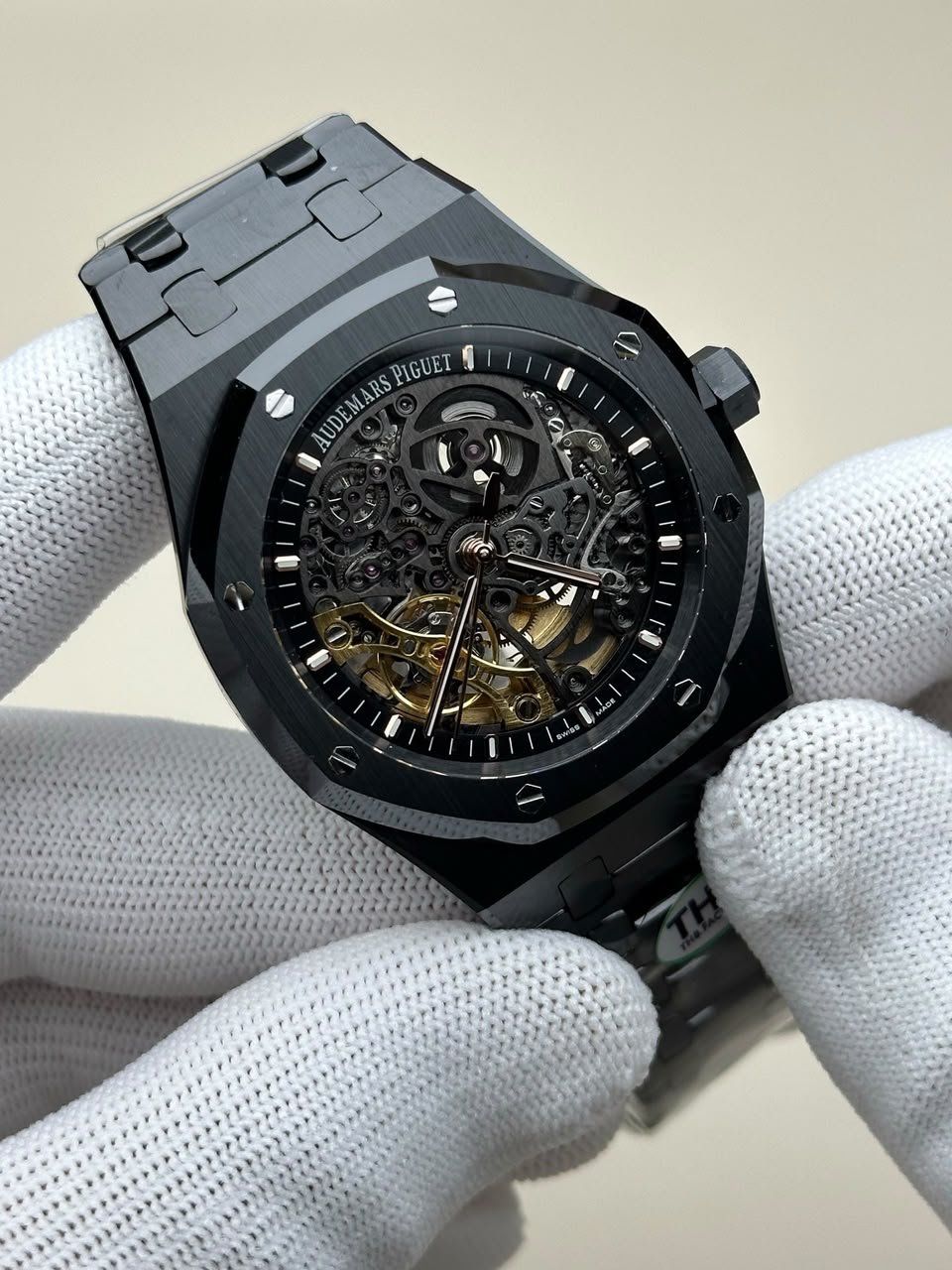
The 15416CE retains the recognizable Royal Oak octagonal bezel architecture.
Eight visible hexagonal screw heads form part of the bezel design, while the black ceramic surfaces incorporate contrasting brushed and polished finishes.
According to the supplied information, THB uses an abrasive finishing process to refine the brushed texture of the bezel.
For technical documentation, the most useful details are the consistency of the brushed grain, transitions between surfaces and alignment of the bezel components.
These characteristics are especially visible on black ceramic because reflections can emphasize differences in surface finishing.
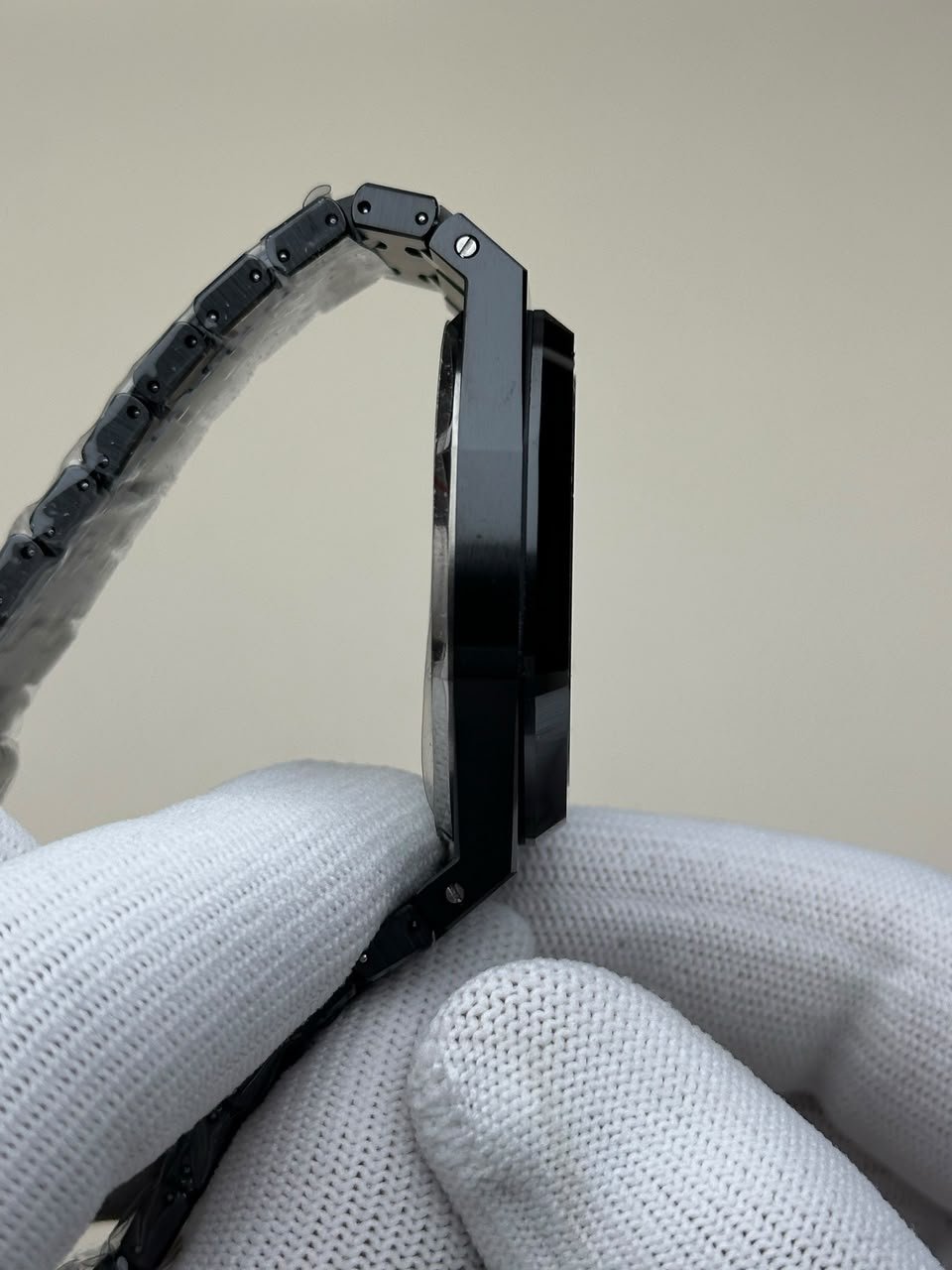
10.1mm Case Thickness
The supplied case thickness is approximately 10.1mm.
This is a significant specification for an openworked automatic watch with an exhibition caseback.
Case thickness affects both wrist presence and the proportions of the Royal Oak case.
The 10.1mm figure should be treated as a factory-stated specification until confirmed through direct measurement.
Actual thickness measurements belong in the corresponding individual QC record.
Openworked Movement Architecture
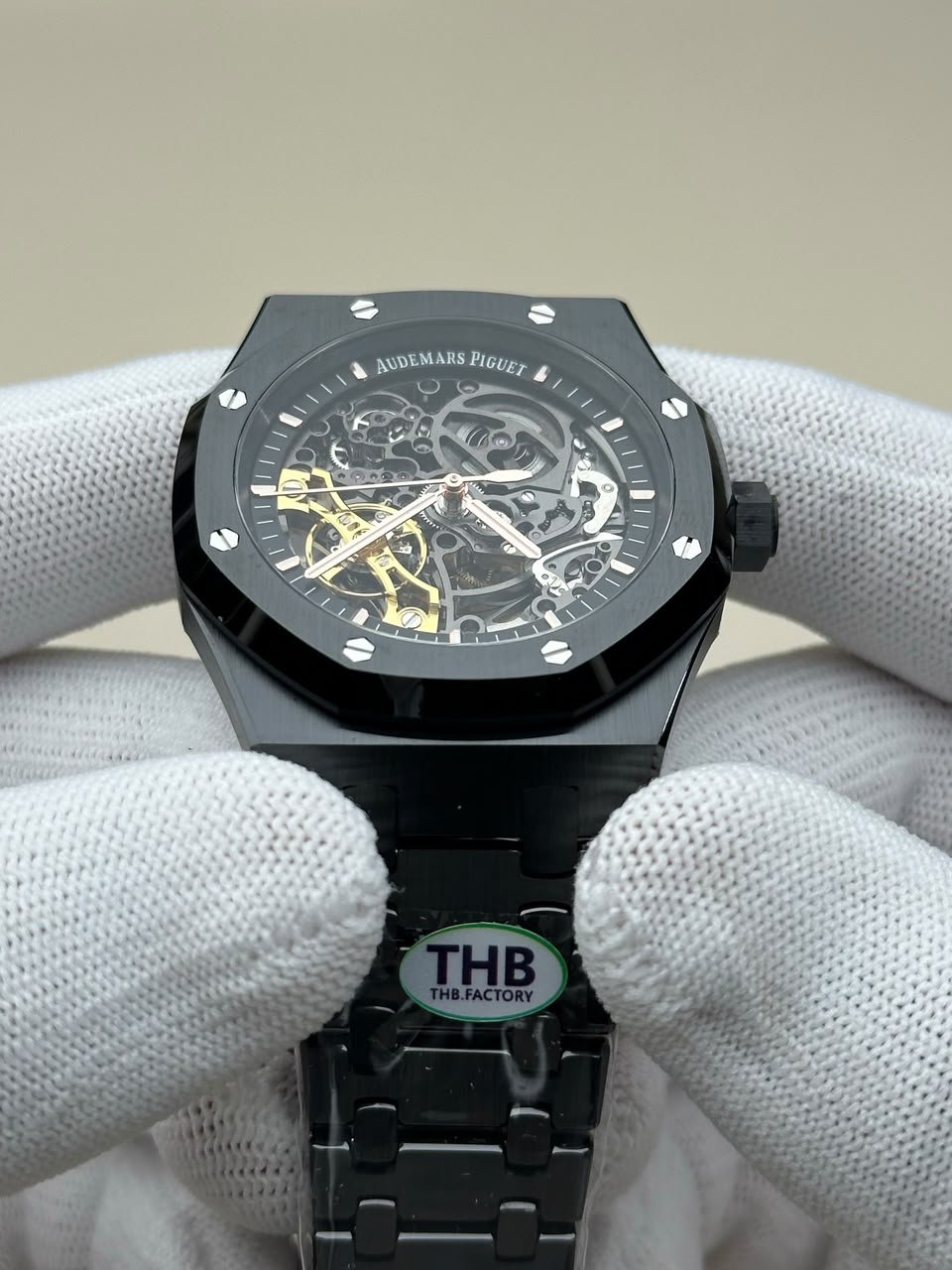
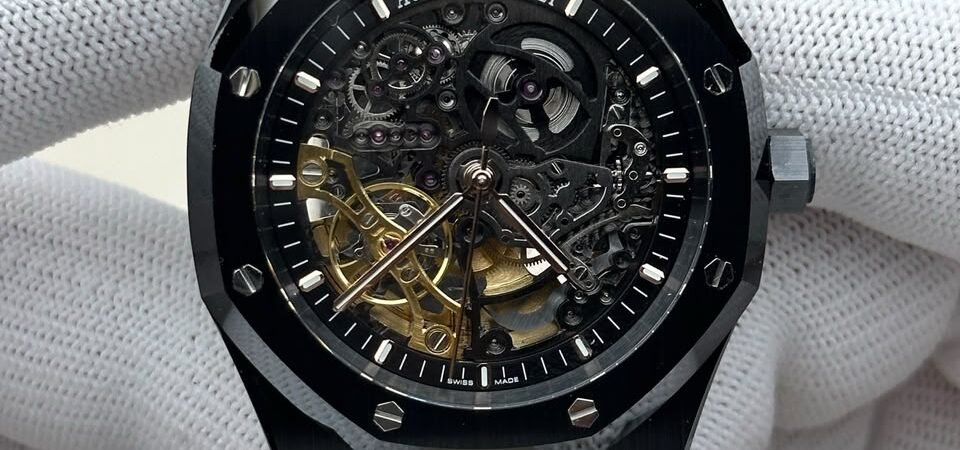
The openworked construction is the defining visual and mechanical characteristic of the THB 15416CE.
Instead of concealing the movement behind a conventional dial, the watch exposes bridges, gears and the balance assembly.
This allows the mechanical arrangement to become part of the watch’s appearance.
The supplied THB configuration describes a customized integrated-style movement with a free-sprung balance assembly.
Because the exact underlying caliber has not been independently identified, the movement should be classified by its observable architecture rather than assigned an unsupported caliber designation.
Free-Sprung Balance System
The supplied THB configuration describes a free-sprung balance, meaning the balance is intended to regulate its rate through the balance’s inertia rather than a conventional regulator that changes the effective hairspring length.
In a conventional regulated balance system, rate adjustment commonly involves changing the effective working length of the hairspring.
A free-sprung system instead uses adjustments to the balance’s moment of inertia.
This distinction is mechanically meaningful, but the presence of a free-sprung balance does not automatically guarantee superior accuracy.
Actual performance depends on the movement’s construction, adjustment, balance condition and operating characteristics.
Visible Balance at 8 O’Clock
One of the most recognizable details of the THB 15416CE is the exposed balance assembly near the 8 o’clock position.
The supplied version describes a revised functional balance and balance bridge arrangement.
The moving balance provides a direct view of the regulating system, while the surrounding bridges and gear train contribute to the openworked appearance.
For technical classification, it is important to distinguish a functioning mechanical balance from decorative moving components.
The visible balance should also not be confused with a tourbillon, which uses a different regulating assembly.
Movement Bridges and Finishing
The openworked movement exposes several components that would normally be hidden behind a dial.
These include portions of the gear train, movement bridges and regulating assembly.
The supplied configuration emphasizes revised bridge finishing and decorative treatments.
Different finishing techniques can create contrasting visual textures across the movement, particularly where polished edges meet brushed or matte surfaces.
However, decorative finishing should be evaluated separately from mechanical performance.
An attractive openworked movement does not necessarily indicate a better-regulated movement.
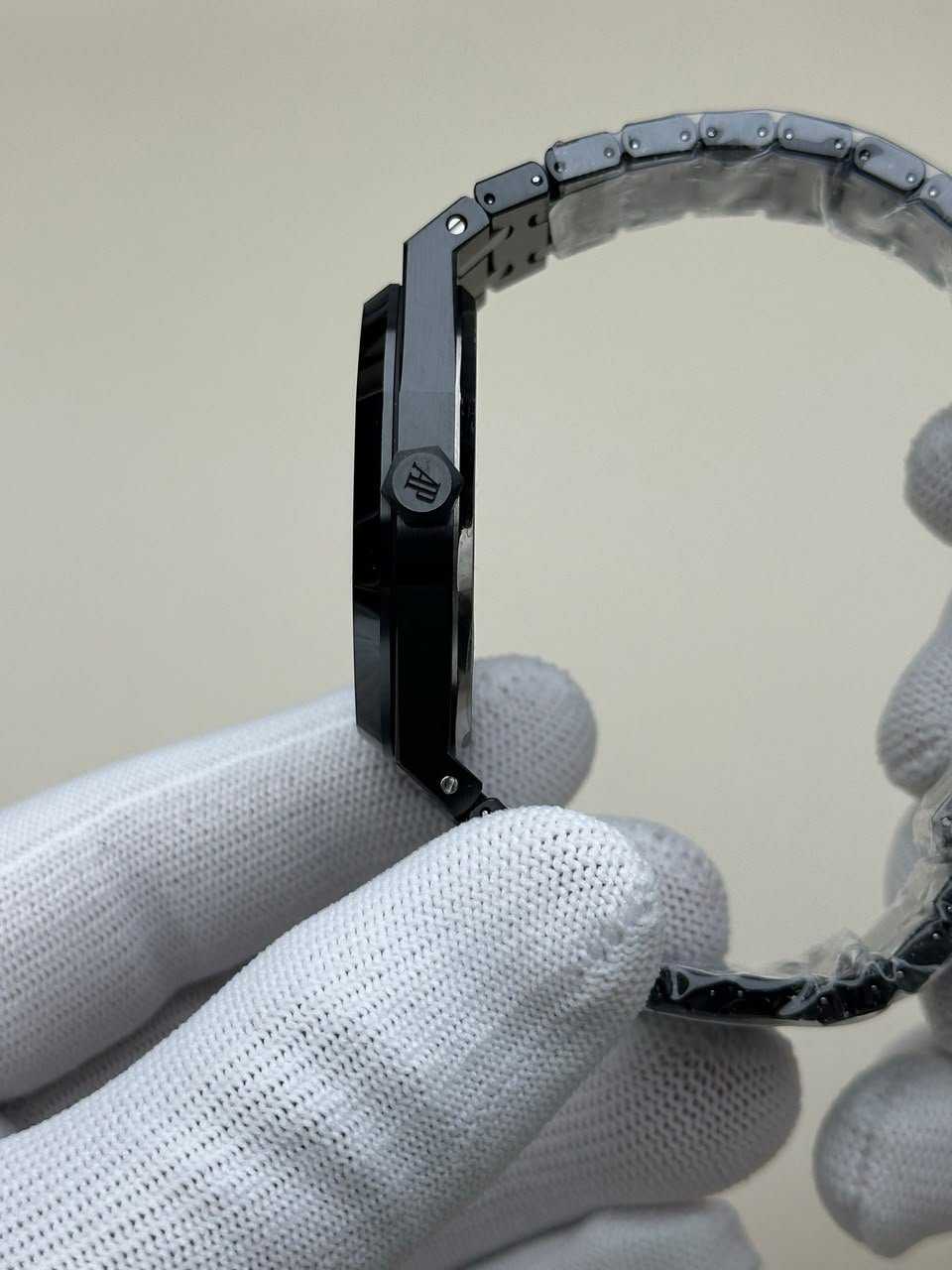
Ceramic Crown Construction
The THB configuration describes a ceramic crown with a revised engraved logo.
The crown forms an important part of the overall black ceramic design, but it also serves a mechanical function through the winding and setting mechanism.
Useful construction details include the crown profile, engraved emblem, seating against the case and operation of the setting positions.
The ceramic exterior should not be interpreted as proof that every internal crown or stem component is ceramic.
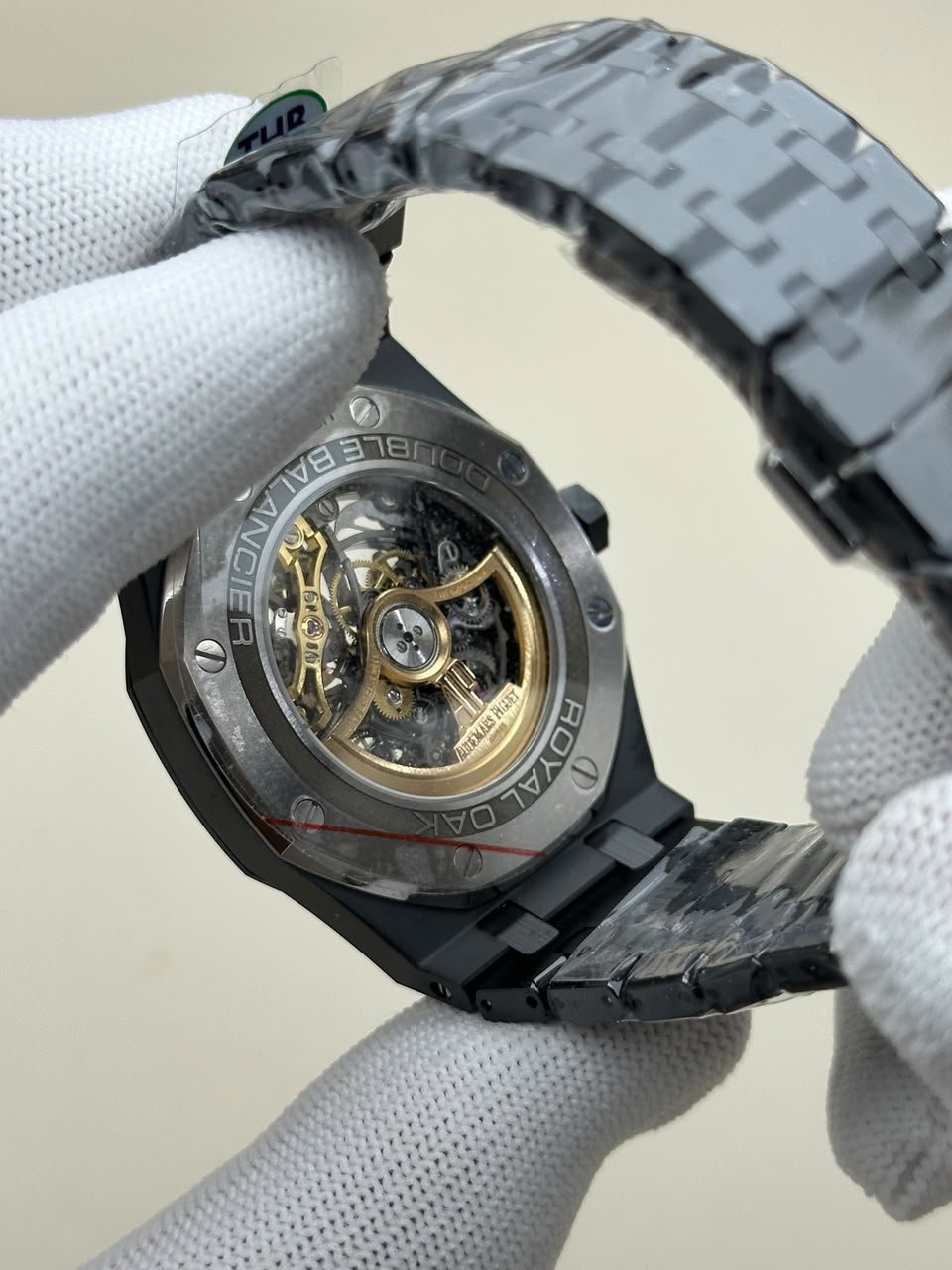
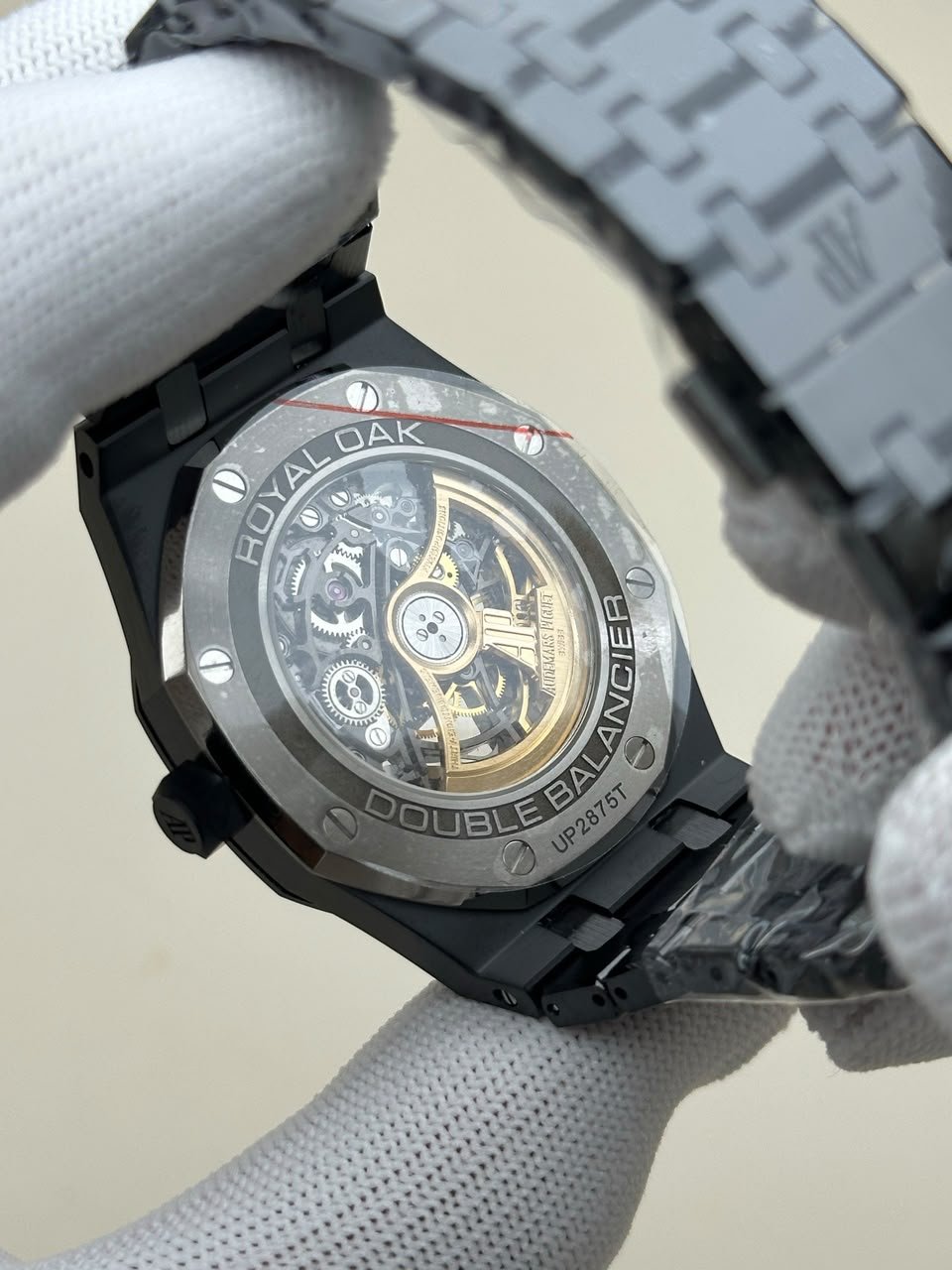
Caseback and CNC Engraving
The supplied version features an exhibition caseback with revised CNC-style engraving.
The engraving is described as having greater depth and a more pronounced three-dimensional appearance.
This is relevant for documenting differences between production versions because caseback markings can change even when the underlying movement architecture remains similar.
The caseback also provides an additional view of the movement and its finishing.
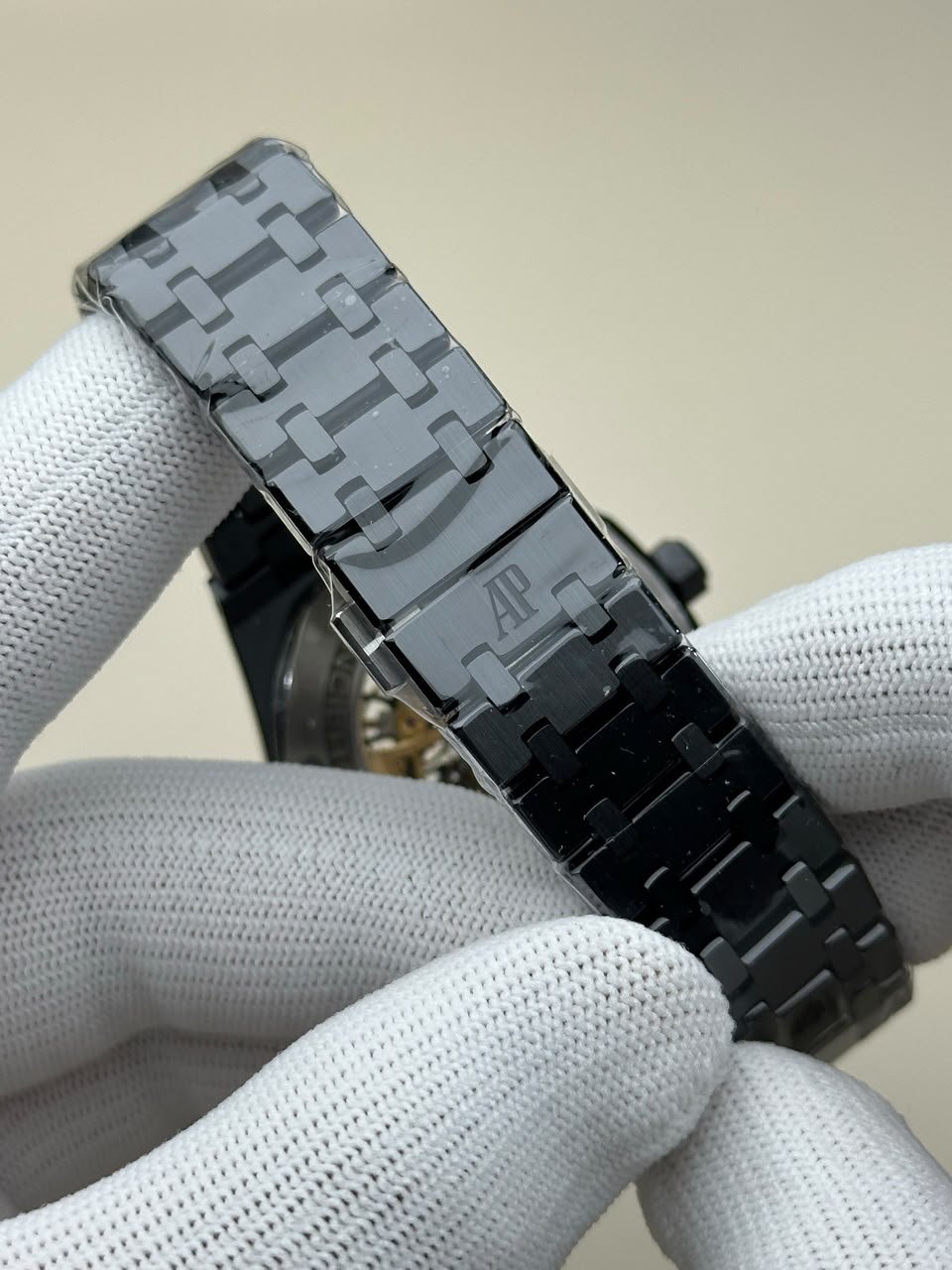
Ceramic Bracelet and Clasp
The integrated black ceramic bracelet continues the visual design of the case.
The supplied THB configuration also describes revisions to the clasp emblem, including deeper engraved detailing.
For a ceramic bracelet, the relationship between individual links, connecting hardware and clasp components is particularly important.
Ceramic links provide high scratch resistance, but impact resistance and bracelet construction should be considered separately.
The clasp’s engraved emblem is a finishing detail rather than evidence of movement quality.
316L Stainless-Steel Hardware
Although the principal exterior is ceramic, the supplied configuration uses 316L stainless steel for selected screws and connecting hardware.
This distinction is important because describing the watch as entirely ceramic could incorrectly imply that every structural component is made from ceramic.
The supplied hardware incorporates polished surfaces and revised screw-thread geometry.
Thread design and component fit are relevant to assembly, but claims that screws can never loosen should not be made without supporting durability testing.
Technical Specifications
Specification THB Factory 15416CE
Factory THB Factory
Brand Audemars Piguet
Collection Royal Oak Openworked
Reference 15416CE
Case Material Black Ceramic
Bracelet Integrated Black Ceramic
Case Thickness Approx. 10.1mm
Bezel Octagonal Ceramic
Bezel Hardware Eight Visible Hexagonal Screws
Movement Customized Openworked Automatic
Balance Configuration Free-Sprung, Factory-Stated
Visible Balance Position Approx. 8 O’Clock
Caseback Exhibition Caseback
Crown Ceramic Exterior
Connecting Hardware Selected 316L Stainless Steel Components
Clasp Ceramic Exterior with Engraved Emblem
Actual QC & Movement Testing
The specifications above describe the THB Factory AP Royal Oak 15416CE configuration. Individual movement performance, measured dimensions and finishing details should be evaluated using actual sample data.
For first-hand Timegrapher results, measured thickness, weight, balance operation, movement-function testing and ceramic finishing observations, see our THB Factory AP Royal Oak 15416CE QC Test.
FAQ
What material is used for the THB Factory 15416CE?
The principal exterior components, including the case and bracelet, are described as black ceramic. Selected screws and connecting components use 316L stainless steel.
What is the thickness of the THB 15416CE?
The supplied specification is approximately 10.1mm. Actual thickness should be confirmed through individual measurement.
Does the THB 15416CE use a free-sprung balance?
The supplied THB configuration describes a free-sprung balance assembly. Its exact construction and mechanical performance should be assessed through movement inspection and testing.
Is the visible balance at 8 o’clock a tourbillon?
No. A conventional exposed balance and a tourbillon are different mechanical arrangements. The supplied configuration describes an exposed free-sprung balance rather than a tourbillon.
Is the black ceramic scratch-proof?
No. Ceramic generally offers high surface scratch resistance, but it can still be chipped or fractured by impacts.
Does a free-sprung movement automatically provide better accuracy?
No. A free-sprung balance is a regulating architecture. Actual accuracy depends on the movement’s condition, adjustment and measured performance.