SMF Factory Omega Speedmaster Dark Side of the Moon Ceramic Chronograph Technical Guide
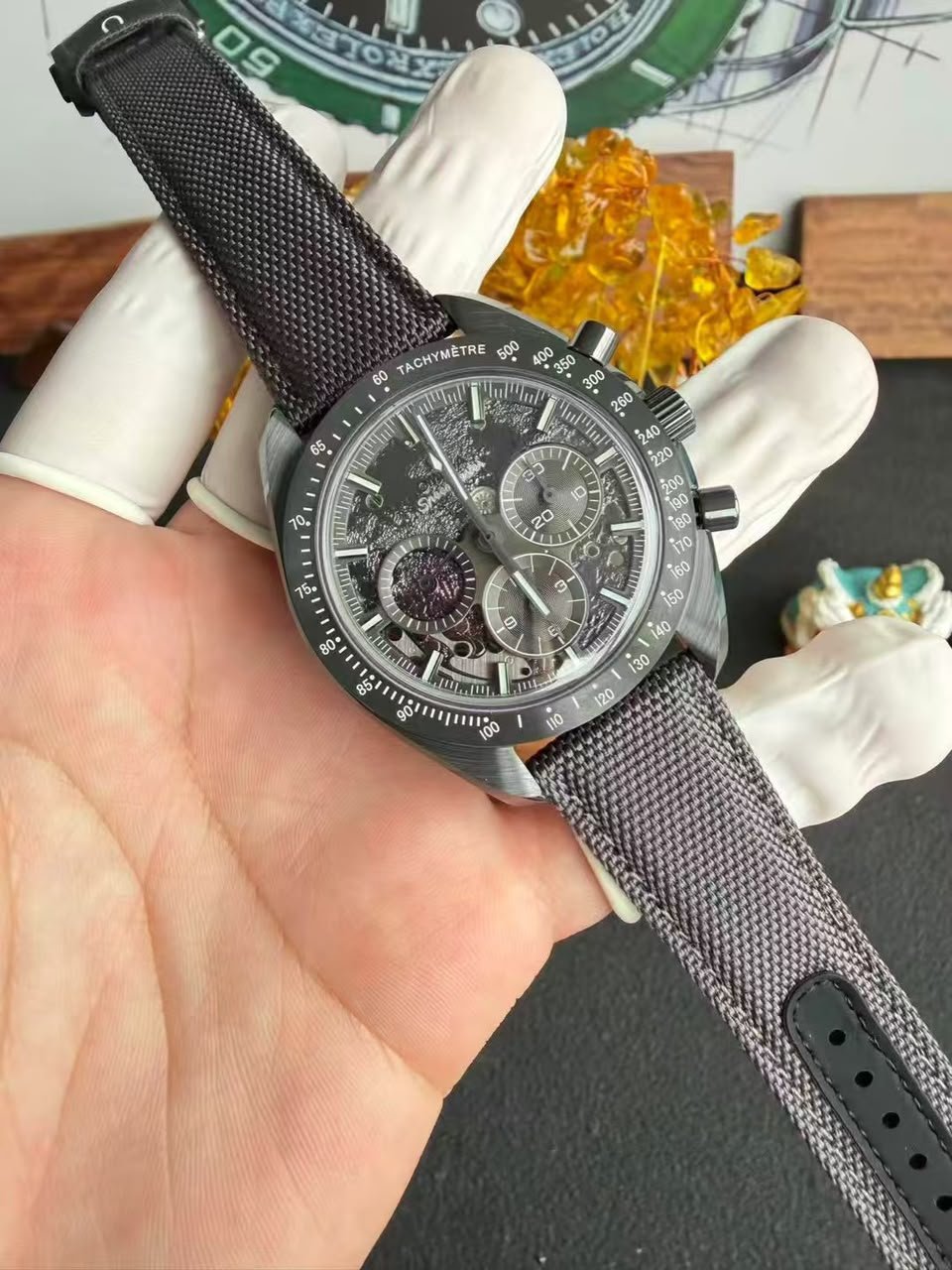
The SMF Factory Omega Speedmaster Dark Side of the Moon is a ceramic-case mechanical chronograph configuration featuring a three-register dial layout and a customized manual-winding movement.
According to the supplied production information, the SMF version focuses on ceramic case construction, revised dial proportions, movement bridge and gear finishing, and multiple strap and clasp configurations.
The movement specifications reference 1865, 1869 and 3869-style manual-winding architectures. These designations should be treated as version-specific configurations until the exact movement fitted to each model is confirmed.
The primary technical characteristics of this series are its ceramic case construction, three-register chronograph layout and manual-winding movement architecture.
Ceramic Case Construction
The SMF configuration is described as using a ceramic case rather than a stainless-steel case with a dark surface coating.
This distinction is important because ceramic and coated stainless steel differ in material composition, surface characteristics and impact behavior.
A ceramic case generally offers high surface scratch resistance and a consistent material appearance throughout its exposed ceramic surfaces.
However, ceramic is not immune to damage. Strong impacts can cause chipping or fractures, particularly around thin edges and exposed corners.
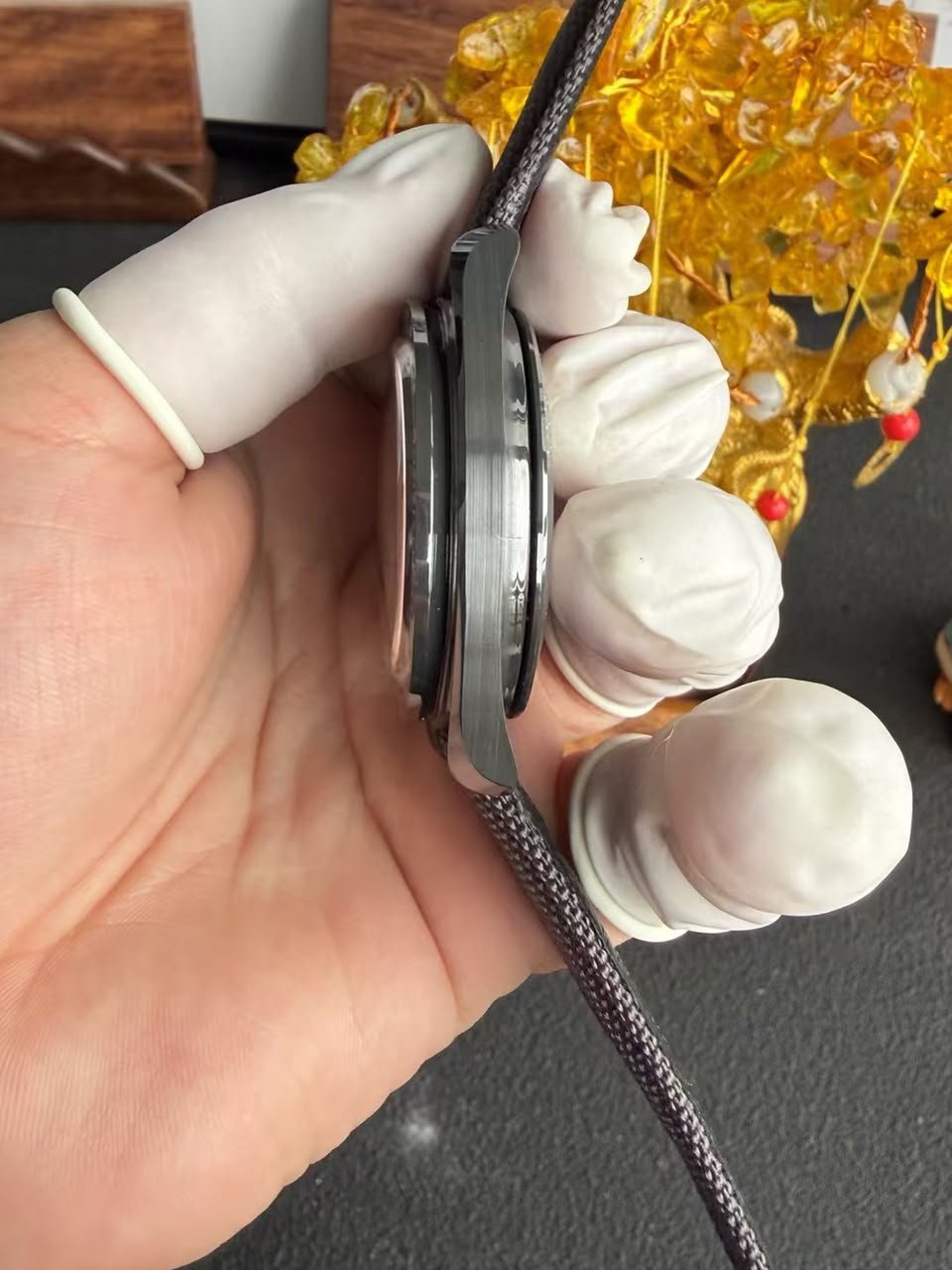
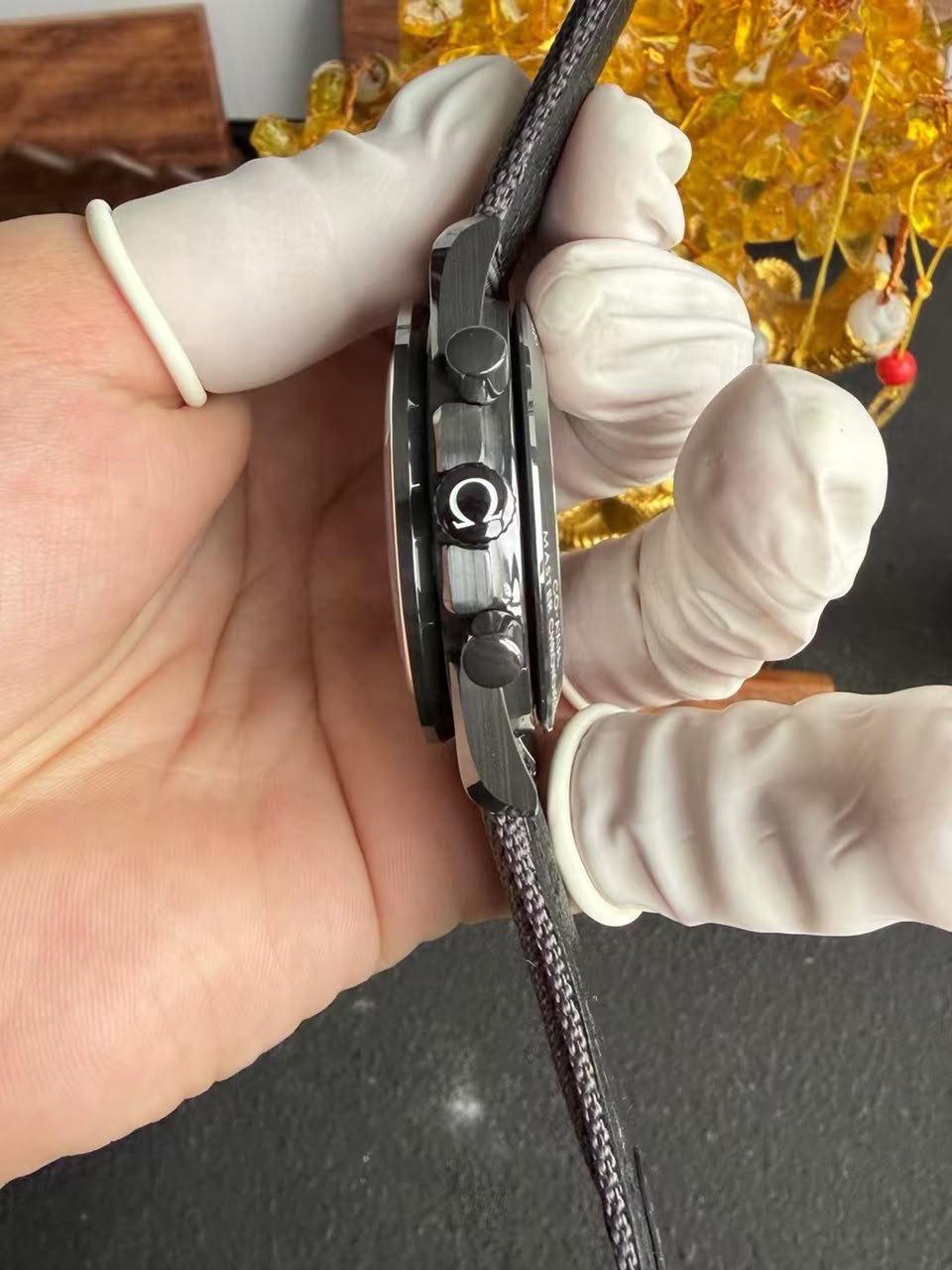
The supplied SMF version also emphasizes the finishing of the case sides, chamfered edges and brushed surfaces.
These areas contribute to the overall case geometry and are useful when documenting differences between production configurations.
Case Profile, Chamfers and Surface Finishing
The case design incorporates multiple surface transitions around the side profile.
According to the supplied information, SMF has revised the case-side contours, chamfers and brushed finishing to follow the intended Dark Side of the Moon design.
These details are particularly relevant on a ceramic case because the appearance of each surface changes with lighting direction.
Important characteristics include the consistency of the brushed texture, the definition of the chamfered edges and the transitions between adjacent surfaces.
Unlike a conventional metal case, ceramic finishing requires manufacturing and finishing processes suited to the hardness and brittleness of the material.
Three-Register Chronograph Dial
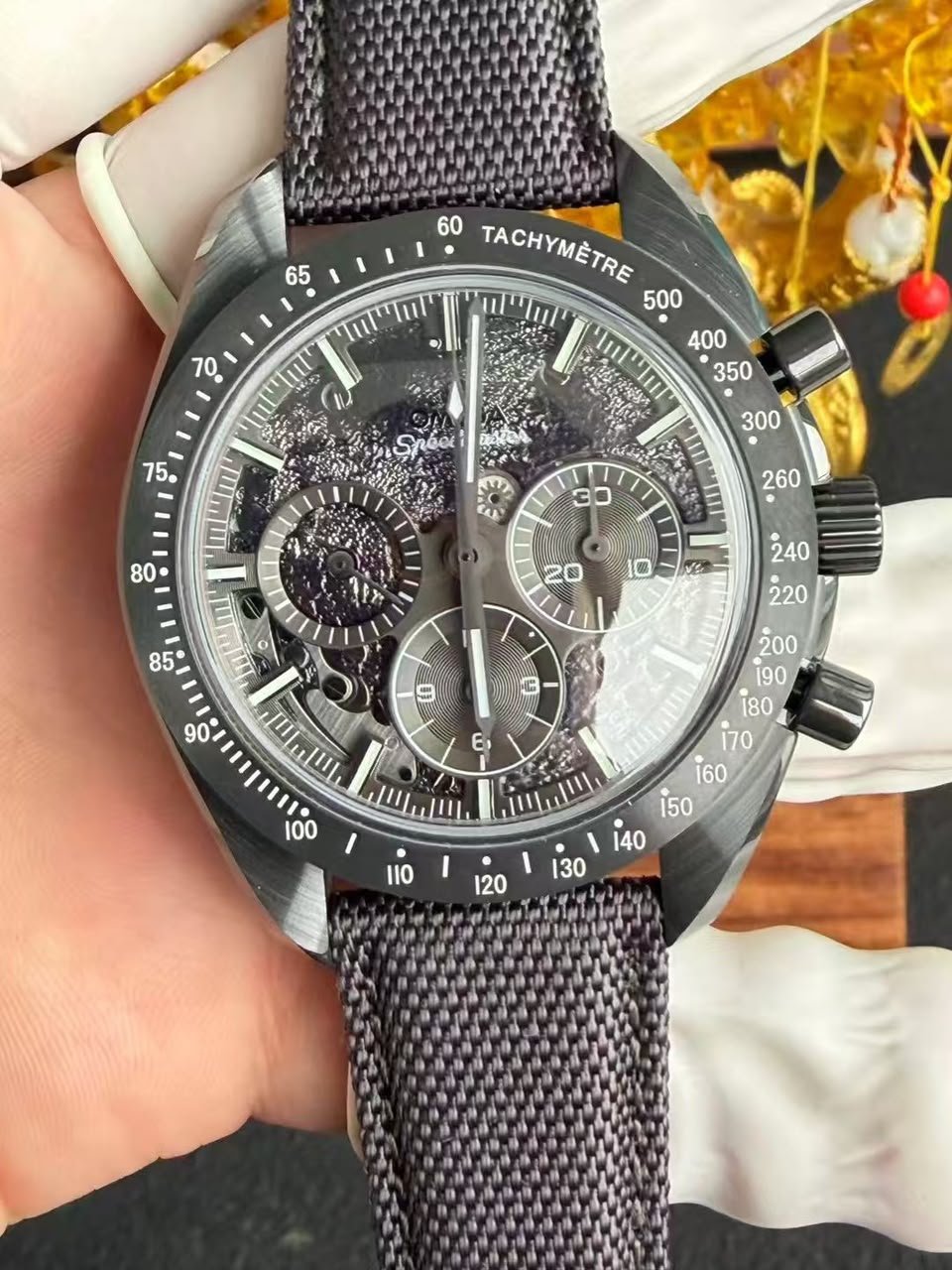
The SMF version features a three-register chronograph dial layout.
One of the main characteristics described in the supplied production information is the relatively compact spacing between the subdials.
Subdial spacing is an important technical and visual characteristic because it is influenced by the movement’s underlying architecture and the placement of its display mechanisms.
A watch may reproduce the overall appearance of a chronograph dial while using different internal movement arrangements.
For this reason, the relationship between the central hands, subdial positions and movement architecture is more informative than appearance alone.
Dial Surface and Applied Hour Markers
The supplied dial configuration includes contrasting surface finishes intended to create different visual effects under changing light.
The dial is also described as using stepped or sloped applied hour markers.
These markers introduce additional depth compared with simple flat printed indices.
For technical documentation, useful characteristics include marker height, edge finishing, alignment and the transition between the applied markers and the dial surface.
The visual appearance of the dial can change with lighting angle, so controlled photography is particularly useful when documenting the finish.
Manual-Winding Movement Architecture
The SMF Dark Side of the Moon series is described as using customized manual-winding movements associated with the following designations:
1865-Style
1869-Style
3869-Style
These should not automatically be treated as interchangeable movement names.
The exact mechanical architecture, chronograph arrangement and version-specific characteristics must be identified for each configuration.
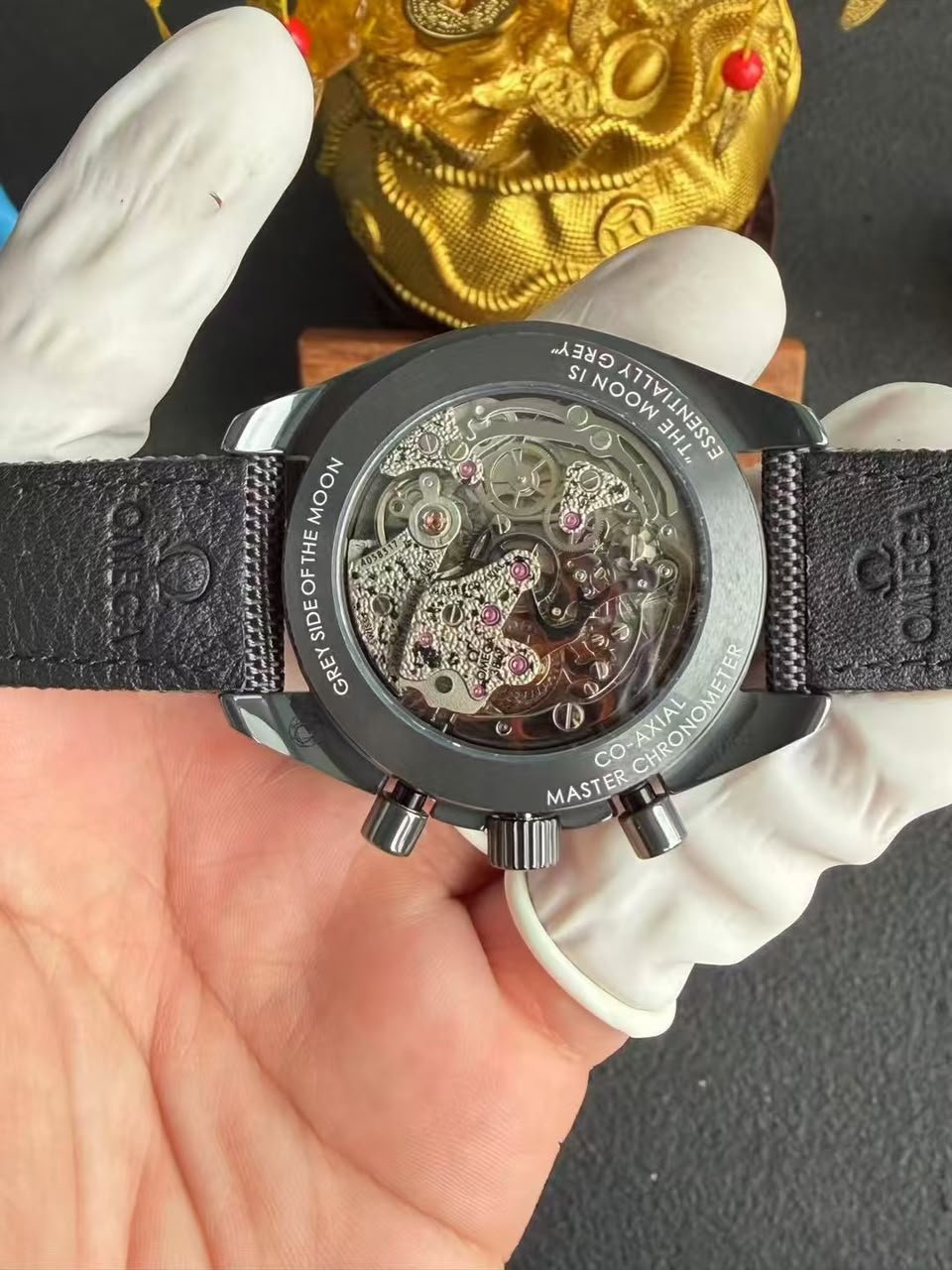
The supplied information describes revised movement construction and finishing, including steel-colored gears and screws.
However, the color of the visible movement components does not independently establish their material composition or mechanical interchangeability.
For database classification, the most accurate description at this stage is:
Movement Type: Customized Manual-Winding Mechanical Chronograph
Movement Versions: 1865 / 1869 / 3869-Style, Depending on Configuration
Exact Underlying Caliber: Not Confirmed
Manual Winding vs Automatic Winding
A manual-winding chronograph requires the mainspring to be wound through the crown rather than relying on an automatic winding rotor during normal wear.
This creates a different interaction between the wearer and the movement.
For a manually wound mechanical chronograph, winding resistance and the manufacturer’s intended winding procedure are important operating considerations.
The presence of a manual-winding movement also affects the construction and appearance of the movement when viewed through an exhibition caseback.
The SMF configuration should therefore be categorized separately from automatic Dark Side of the Moon versions using 9300-style or other automatic chronograph architectures.
Movement Gear and Screw Finishing
The supplied SMF configuration emphasizes the appearance of the movement’s gears and screws.
These components are described as using a steel-colored finish intended to follow the visual characteristics of the reference movement.
Movement finishing can include different surface treatments on gears, screws, bridges and other visible components.
However, decorative finishing should be considered separately from mechanical construction.
A movement with visually refined finishing does not necessarily demonstrate better accuracy, chronograph reliability or power reserve.
Those characteristics require individual functional testing.
Chronograph Function Architecture
The three-register dial provides the visual framework for the chronograph indications.
For a modified manual-winding chronograph, the exact functions assigned to each subdial should be documented according to the installed movement.
This distinction is important because different movement modifications can produce similar external dial layouts while using different internal mechanisms.
The actual chronograph start, stop, reset and elapsed-time recording functions should therefore be established through individual testing rather than assumed from the dial arrangement alone.
Leather and Nylon Strap Configurations
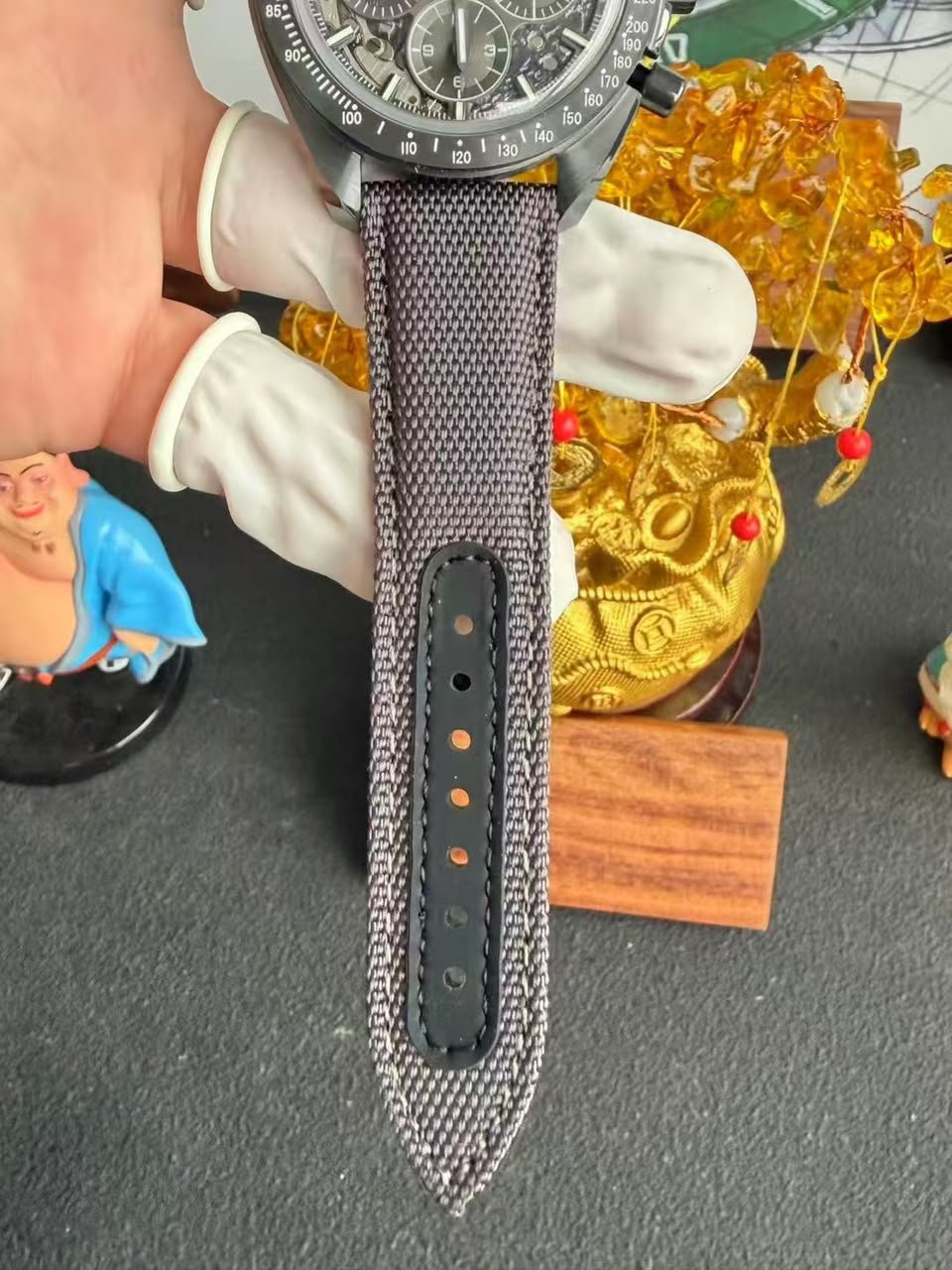
The supplied SMF version includes different strap options.
One configuration uses a perforated leather strap with contrasting colored interior details, including yellow and red variations.
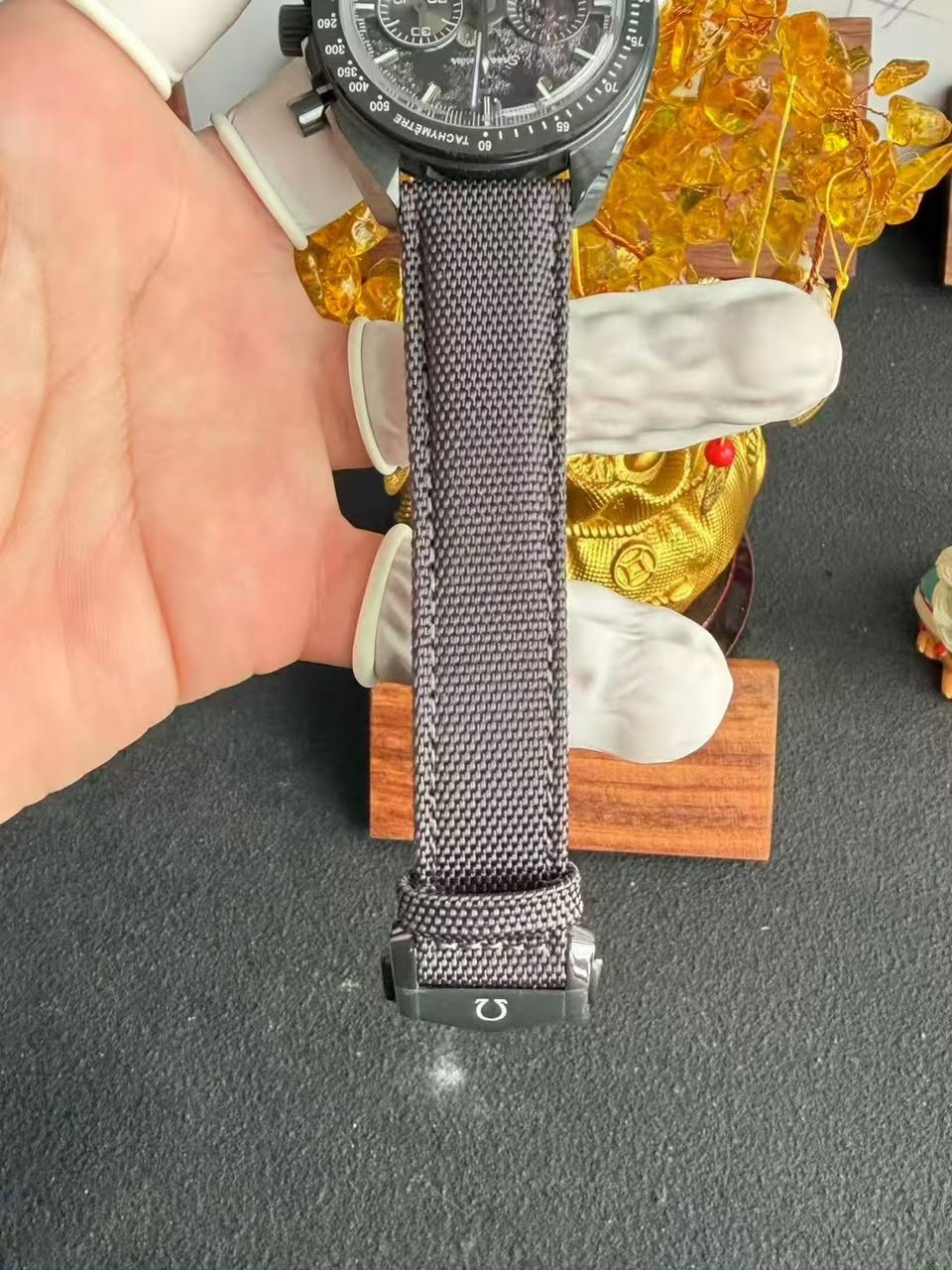
Another configuration uses a coated nylon-style strap with rubber elements around selected strap openings.
These configurations provide different material and wearing characteristics.
Leather, nylon and rubber each respond differently to moisture, friction and repeated bending.
For database purposes, the strap material and color combination should be recorded as version attributes rather than treated as changes to the underlying movement architecture.
Ceramic and Titanium-Structure Clasp Options
The supplied configuration describes ceramic components used in the buckle and clasp construction.
One option uses a ceramic pin-buckle-style arrangement.
Another is described as a folding clasp combining a ceramic exterior with a titanium-alloy supporting structure.
This distinction is useful because the visible exterior material and the internal structural material are not necessarily the same.
For a folding clasp, the supporting structure provides mechanical strength, while ceramic components contribute to the exterior appearance.
The exact clasp configuration should be associated with the corresponding strap version.
Technical Specifications
Specification SMF Factory Configuration
Factory SMF Factory
Brand Omega
Collection Speedmaster
Series Dark Side of the Moon
Case Material Ceramic, Factory-Stated
Case Finishing Brushed and Chamfered Surfaces
Dial Three-Register Chronograph
Hour Markers Stepped / Sloped Applied Markers
Movement Type Manual-Winding Mechanical Chronograph
Movement Designations 1865 / 1869 / 3869-Style
Movement Base Not Confirmed
Visible Movement Finish Steel-Colored Gears and Screws
Strap Options Perforated Leather / Coated Nylon-Style
Clasp Options Ceramic Pin Buckle / Ceramic and Titanium-Structure Folding Clasp
Exact Reference Not Supplied
Case Dimensions Not Supplied
Actual QC & Movement Testing
The specifications above describe the supplied SMF Factory Dark Side of the Moon configuration. Movement construction, physical measurements and chronograph operation should be documented from the specific watch being tested.
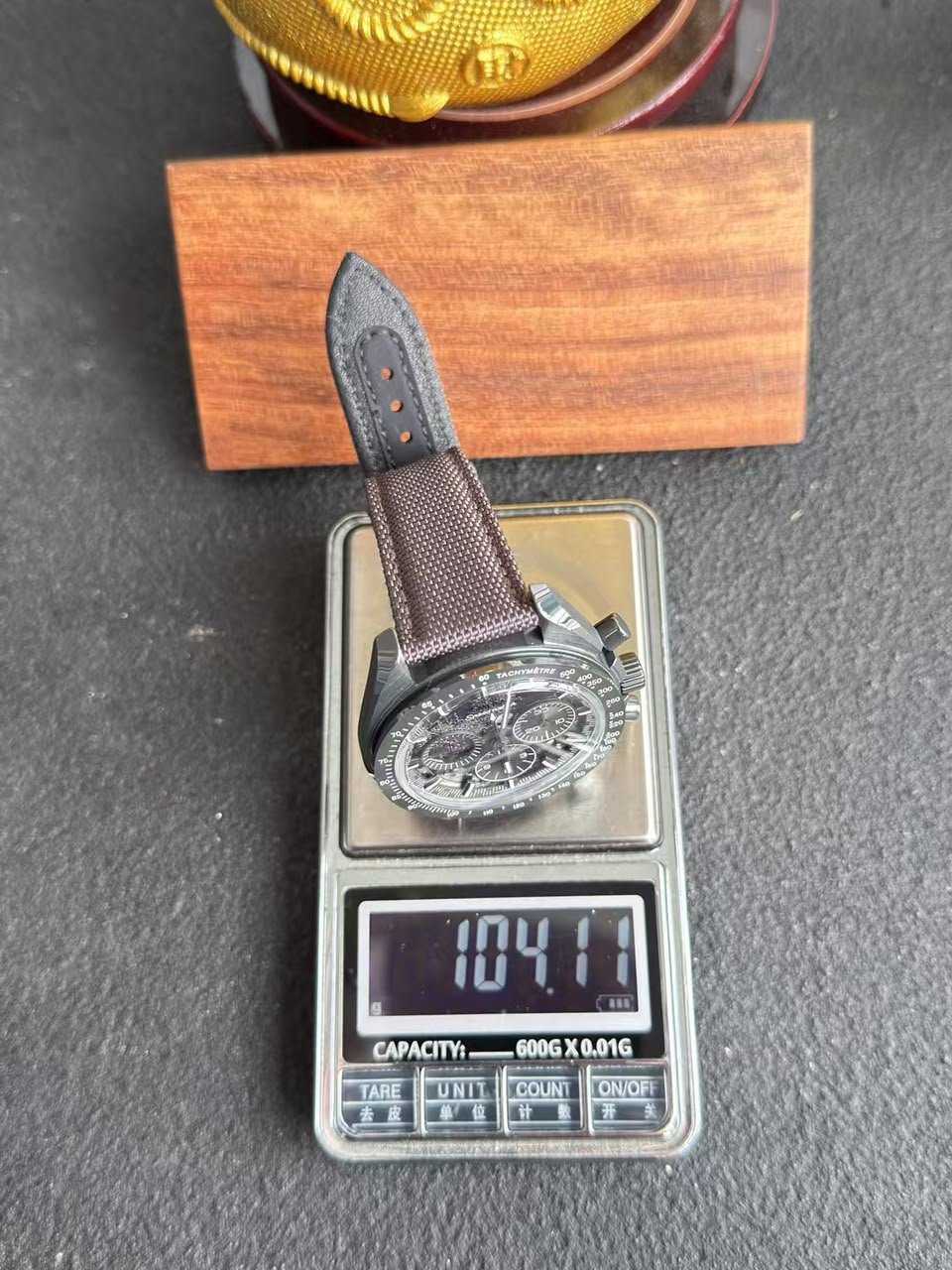
For first-hand Timegrapher results, measured case diameter, thickness, weight, manual-winding operation, chronograph function testing and ceramic finishing observations, see our SMF Factory Omega Speedmaster Dark Side of the Moon QC Test.
FAQ
Does the SMF Factory Dark Side of the Moon use a ceramic case?
According to the supplied production specifications, the SMF version uses a ceramic case rather than a stainless-steel case with a dark surface coating. Individual material verification should be documented separately.
What movement does the SMF Dark Side of the Moon use?
The supplied information identifies customized manual-winding chronograph configurations associated with 1865, 1869 and 3869-style movement designations. The exact movement depends on the specific version.
Is the SMF movement automatic?
The supplied configurations are described as manual-winding mechanical chronographs rather than automatic movements.
What is the difference between this SMF version and automatic Dark Side of the Moon models?
The principal distinction is the movement architecture. This SMF series is described as using manual-winding chronograph configurations, while other Dark Side of the Moon models use automatic chronograph architectures.
What strap options are available?
The supplied configurations include perforated leather straps with contrasting interior colors and coated nylon-style straps with rubber detailing.
Does the watch use a ceramic clasp?
The supplied information describes ceramic buckle components and a folding-clasp option combining a ceramic exterior with a titanium-alloy supporting structure.