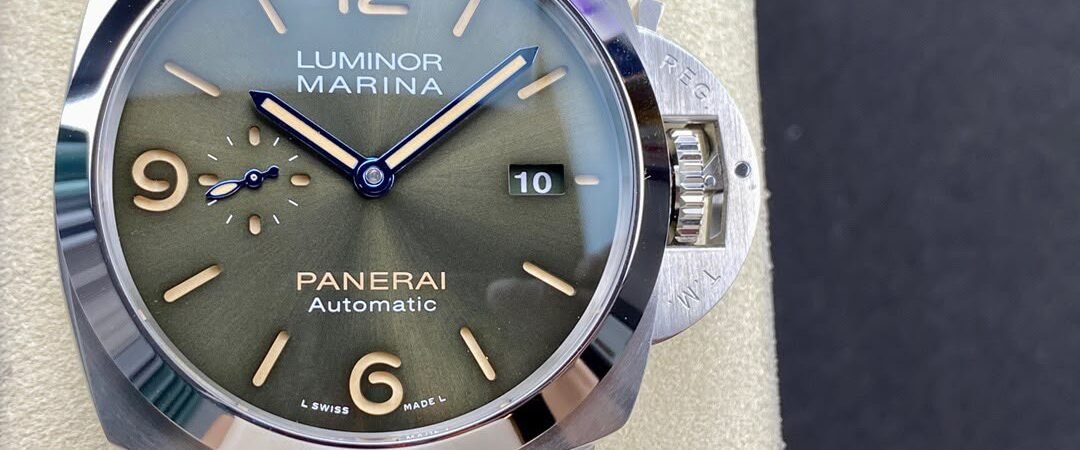
TTF Factory Panerai PAM01116 44mm P.9010 Movement Guide
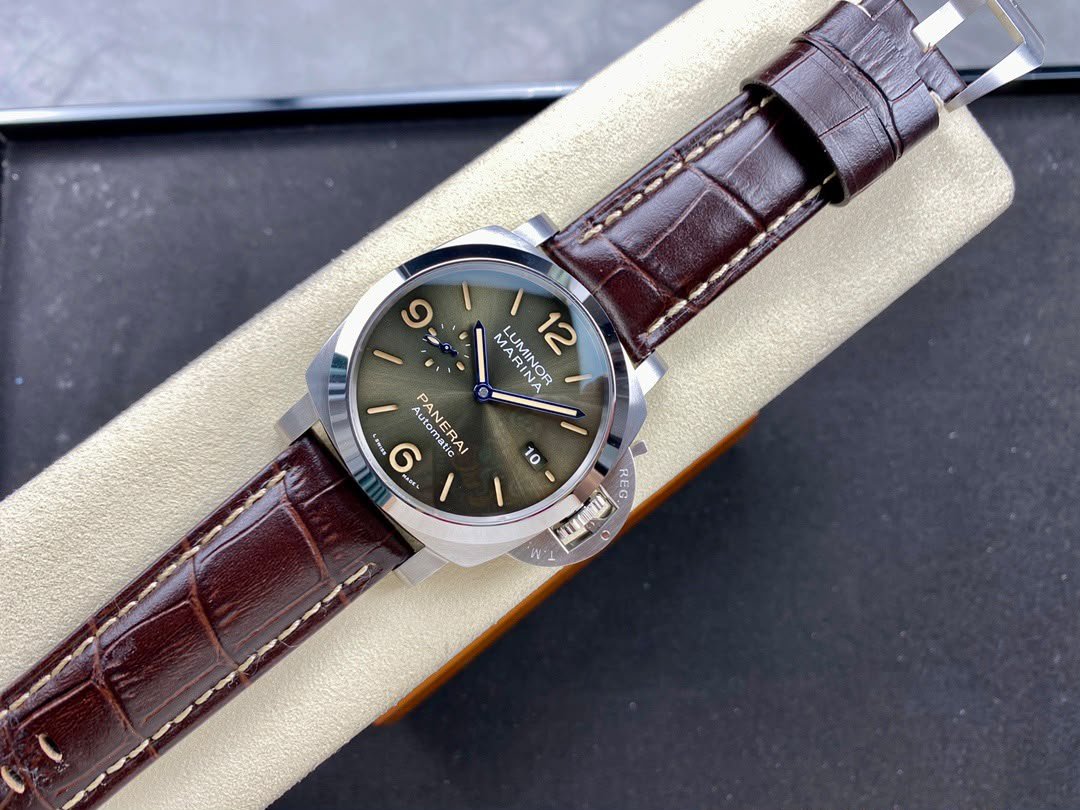
The TTF Factory Panerai PAM01116 is a 44mm Luminor-style mechanical watch combining a green dial, 316L stainless-steel case, sapphire crystal and P.9010-style automatic movement.
The supplied configuration also highlights the visible movement architecture, including the movement bridges and automatic rotor.
For technical documentation, the PAM01116 is useful because several characteristics can be recorded independently: case dimensions, crown-protection system, dial construction, movement architecture, actual movement performance and overall weight.
44mm Luminor Case
The supplied PAM01116 uses a 44mm case format.
This larger case size is one of the recognizable characteristics of the Luminor family.
However, case diameter alone does not fully describe how a Panerai wears on the wrist.
For an individual QC record, useful measurements include:
Case Width → Lug-to-Lug → Thickness → Complete Weight
The thickness and lug-to-lug measurement are particularly useful when comparing different 44mm Panerai references.
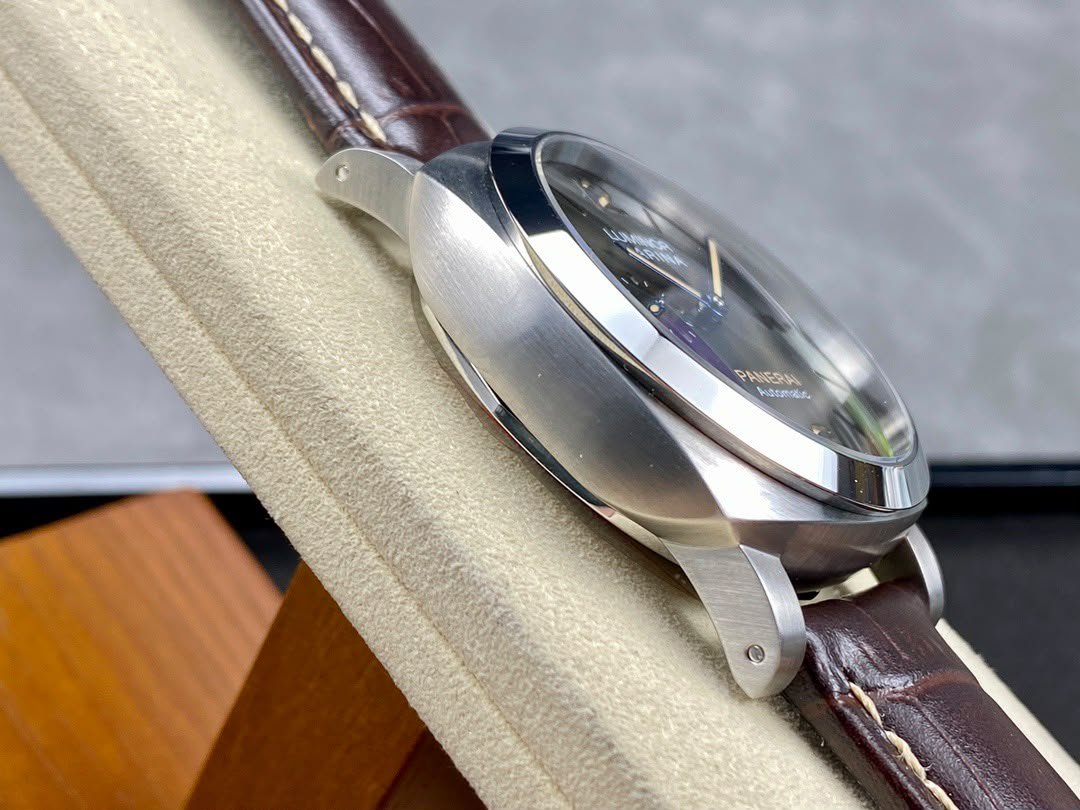
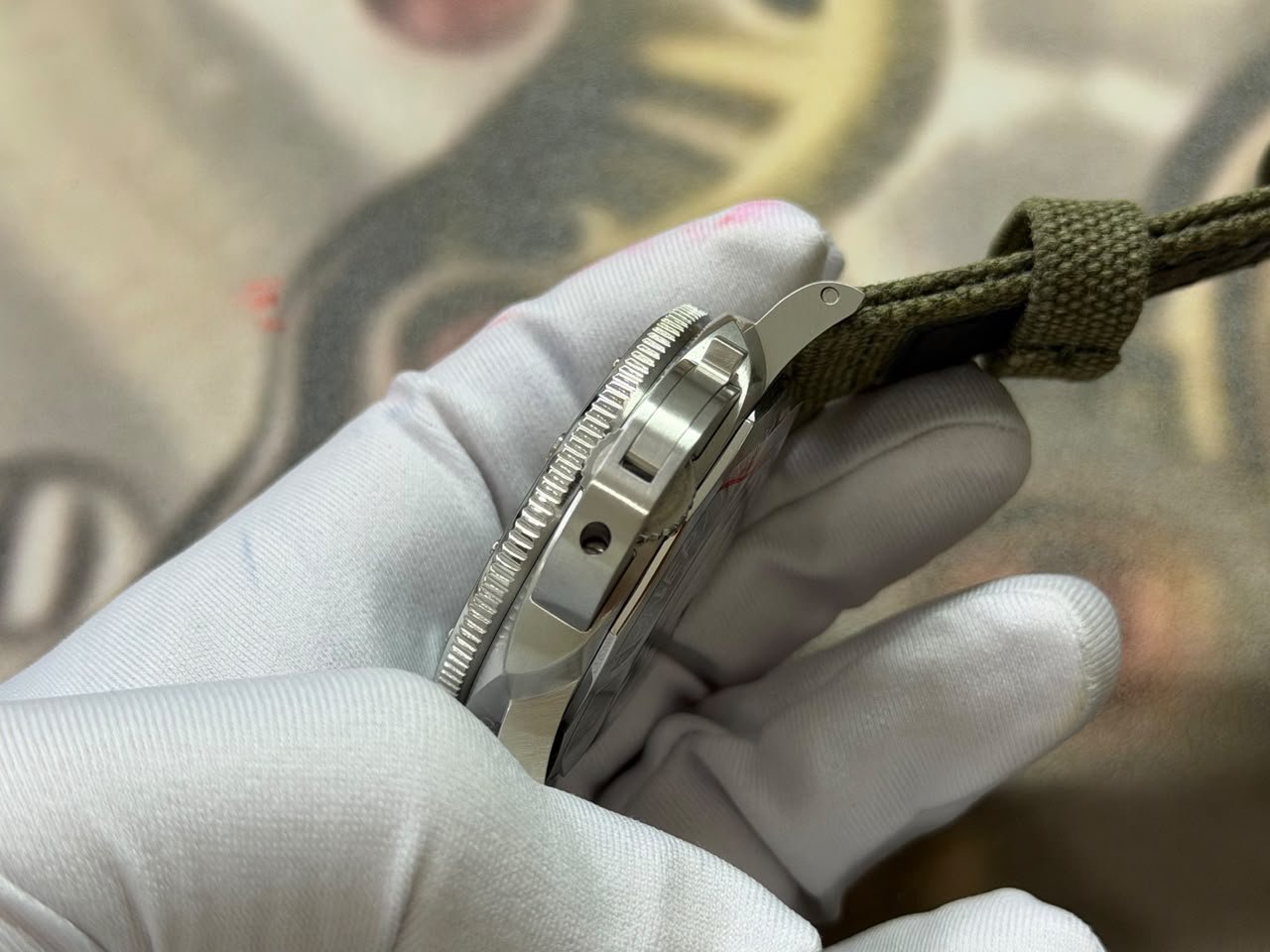
316L Stainless-Steel Construction
The supplied information identifies 316L stainless steel as the case material.
Useful areas for exterior documentation include:
- Bezel
- Case sides
- Lugs
- Crown-protection bridge
- Crown
- Caseback
- Strap attachment
Angled photographs are useful for documenting the transitions between the individual surfaces and the overall geometry of the case.
Crown-Protection Bridge
The crown-protection bridge is one of the most recognizable elements of the Luminor design.
From a functional perspective, this component should not be evaluated only by appearance.
Useful checks include:
Lever Open → Crown Access → Time Setting → Lever Close → Crown Compression
The lever should move consistently through its operating range and close securely against the crown.
A short functional video is useful for an individual QC record.
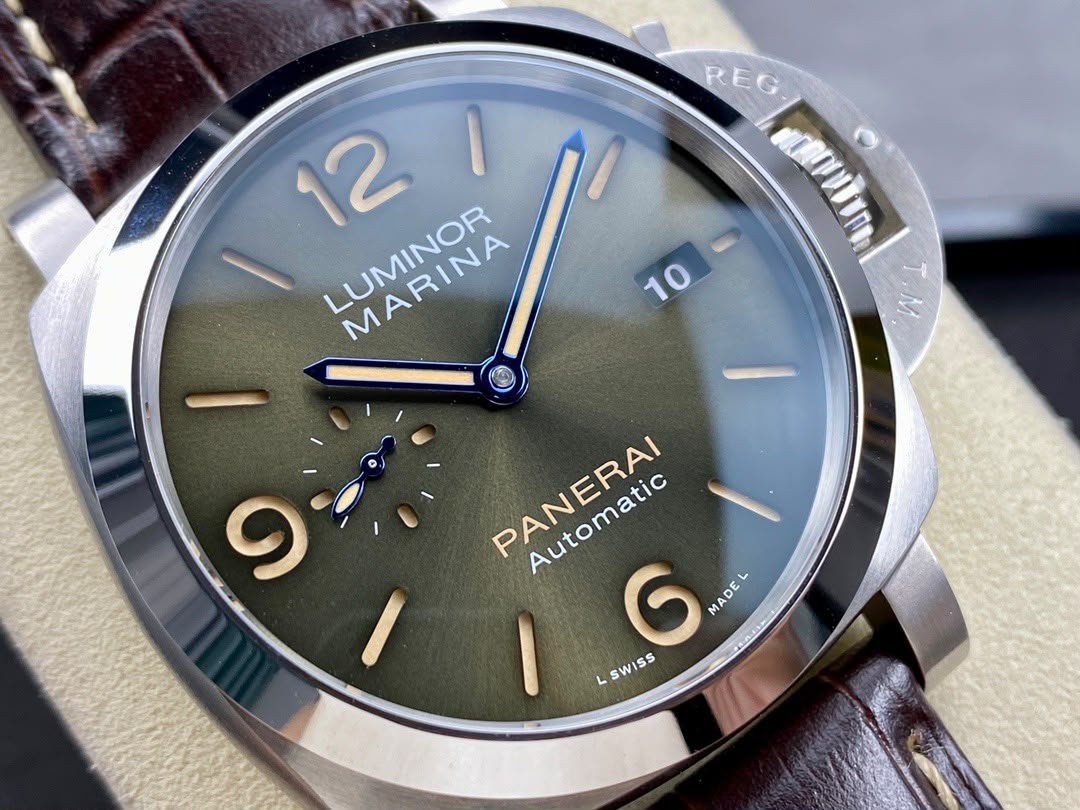
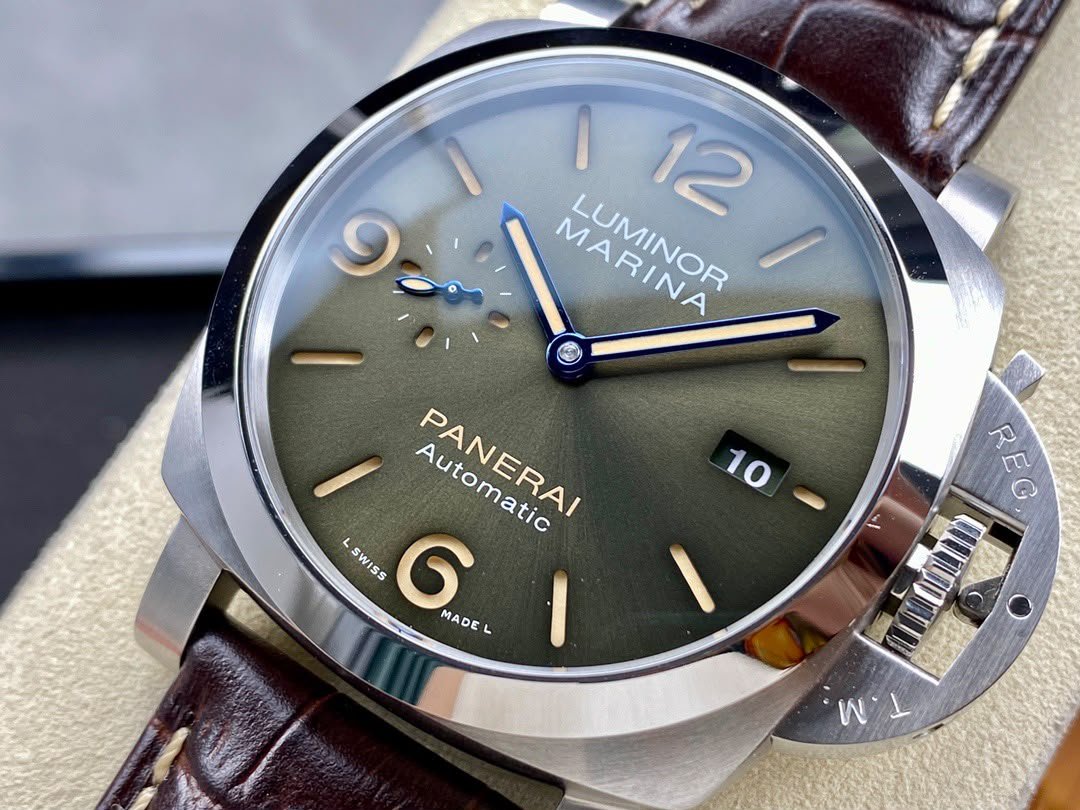
Green Dial
The PAM01116 configuration uses a green dial, making dial color one of the primary visual characteristics of this reference.
Green can change significantly depending on lighting, camera exposure and white balance.
For this reason, the database should avoid absolute descriptions such as “exact original green.”
A more useful photographic record includes the same dial under:
Neutral Light → Natural Light → Angled Light
This provides a clearer indication of how the dial behaves under different conditions.
Dial and Hand Alignment
The relatively open Panerai dial layout makes the position of the markers and hands easy to inspect.
Useful QC areas include:
- Hour markers
- Numerals
- Minute track
- Hour hand
- Minute hand
- Seconds indication
- Printing
- Luminous filling
A straight front photograph provides the best reference for overall alignment.
Luminous Display
Luminous material is an important functional characteristic of this style of Panerai.
A lume test should use a consistent charging method before the watch is photographed in darkness.
Useful comparisons include:
Hour Markers → Numerals → Hour Hand → Minute Hand
The photograph can document the initial color, brightness and distribution of the luminous material.
Sapphire Crystal
The supplied configuration uses a sapphire crystal.
For technical photography, both front and angled images are useful.
A straight photograph helps document dial clarity, while angled lighting reveals reflections and the crystal profile more clearly.
The crystal should also be inspected for visible scratches, edge condition and correct seating in the case.
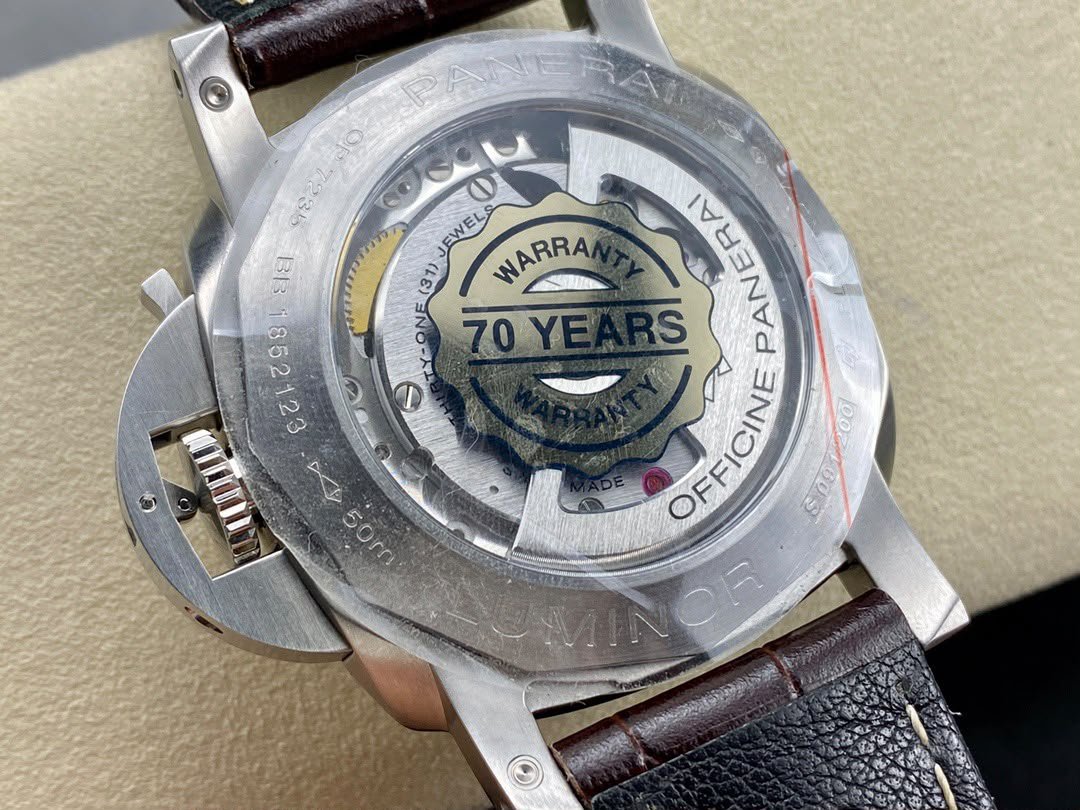
P.9010-Style Automatic Movement
The supplied PAM01116 configuration is described as using a P.9010-style automatic mechanical movement.
For database accuracy, this should be distinguished from an original Panerai P.9010 caliber.
Until the underlying movement construction is independently established in greater detail, the appropriate classification is:
Movement: P.9010-Style Automatic Mechanical
rather than identifying it as a genuine P.9010 caliber.
Movement Bridge Architecture
The supplied information places particular emphasis on the appearance of the movement bridges and automatic rotor.
These components can be documented separately through macro photography.
Useful areas include:
- Bridge layout
- Automatic rotor
- Jewels
- Screws
- Engraving
- Gear components
- Surface finishing
Visible similarity and mechanical architecture should still be treated separately.
A movement can reproduce the appearance of another caliber while using a different underlying construction.
Automatic Rotor
The rotor provides the automatic winding function as the watch moves during wear.
For QC, the useful question is not simply whether the rotor looks correct.
Its mechanical behavior should also be observed.
The rotor should move freely without obvious obstruction, and automatic winding operation can be evaluated together with manual winding and power-reserve testing.
Movement Functional Testing
An individual PAM01116 should undergo basic mechanical testing.
Useful checks include:
Manual Winding → Crown Operation → Time Setting → Automatic Winding → Running Test
If the installed movement supports additional setting functions, these should be documented according to the actual movement configuration rather than assumed from the P.9010 name alone.
Timegrapher Testing
Movement performance can be recorded using a timegrapher.
Useful measurements include:
Daily Rate → Amplitude → Beat Error → Beat Rate
These figures describe the condition of the individual movement at the time of testing.
This is considerably more useful for the database than simply describing the movement as “accurate” or “stable.”
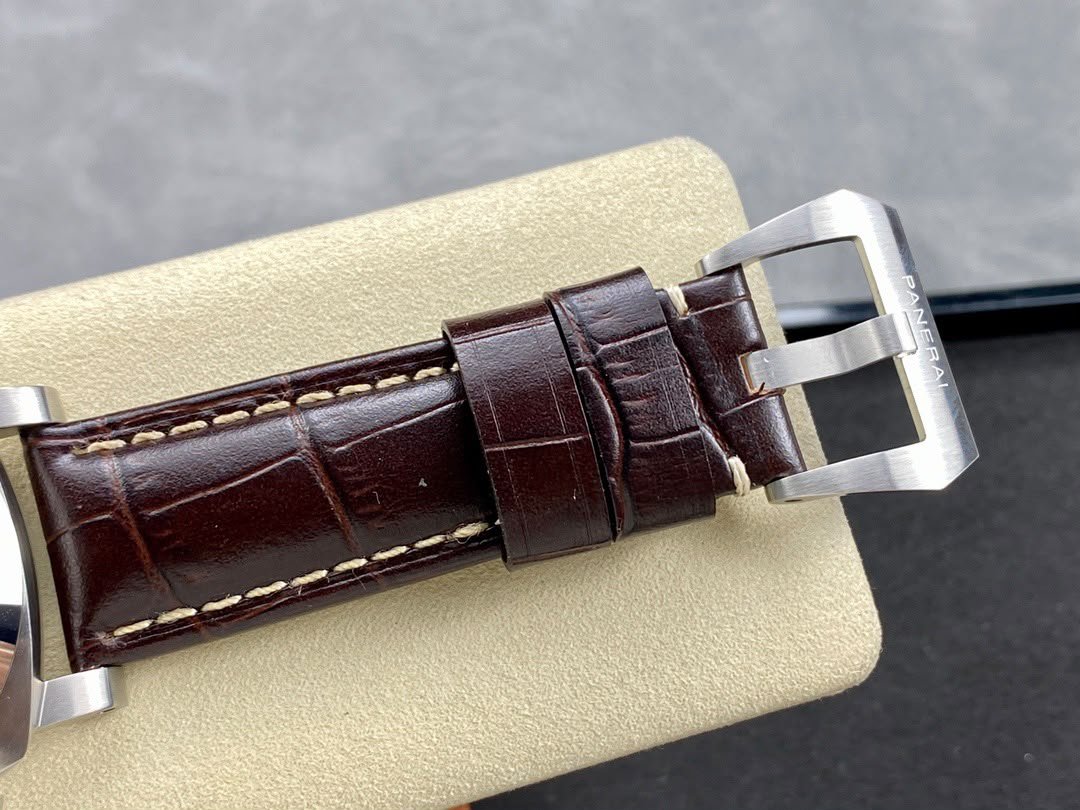
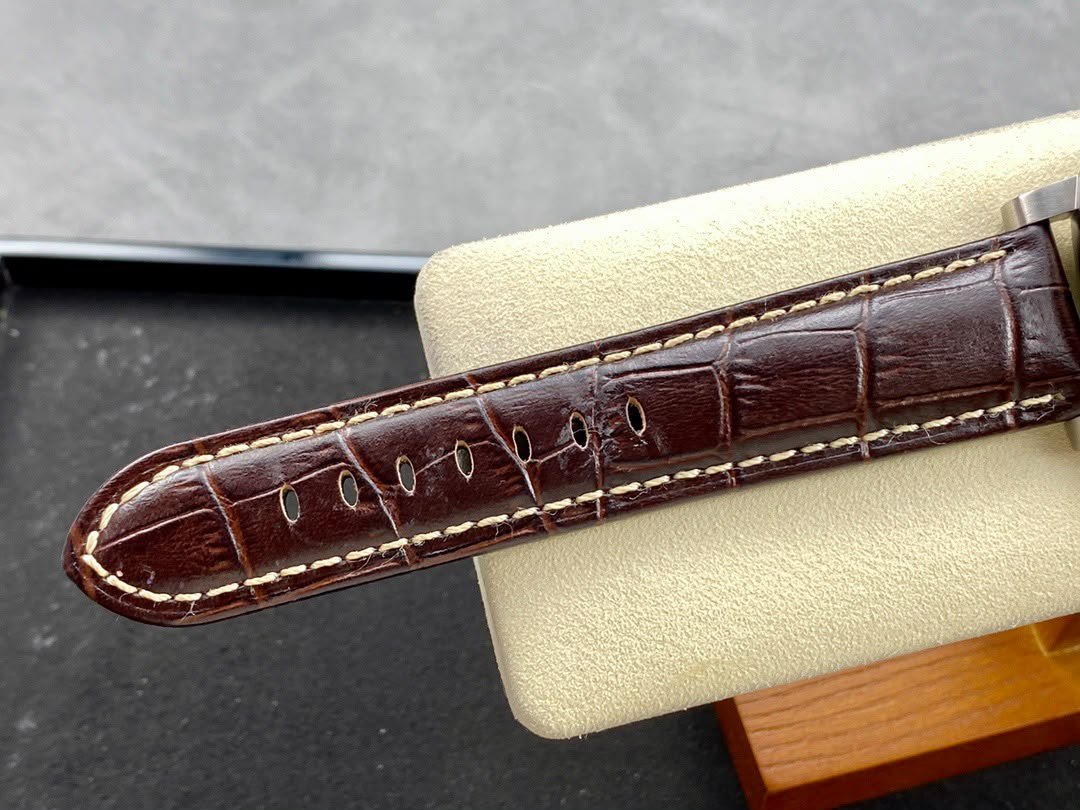
Leather Strap
The supplied PAM01116 configuration uses a leather strap with pin buckle.
The relatively large 44mm case means strap construction has a noticeable effect on wrist fit.
Useful inspection areas include:
- Leather surface
- Stitching
- Edge finishing
- Lining
- Lug connection
- Strap holes
- Pin buckle
The strap should flex naturally without visible separation between its layers.
Pin Buckle
The supplied configuration uses a conventional pin buckle.
Useful QC checks include buckle operation, pin alignment, strap-hole fit and the security of the connection between buckle and strap.
Because the buckle is subjected to repeated mechanical stress during normal use, correct assembly is more important than appearance alone.
Super Clone Watch and Actual PAM01116 Data
The term super clone watch is commonly used in the replica-watch market, but it does not identify a standardized movement or quality level.
For the TTF PAM01116, more useful technical information comes from documenting the 44mm case, 316L steel construction, green dial, P.9010-style movement, actual dimensions, weight and individual timegrapher results.
For actual measurements from an individual example, see our TTF Factory Panerai PAM01116 QC Test.
Details Worth Checking
For an individual TTF PAM01116, first measure the actual case width, lug-to-lug, thickness and complete weight.
The green dial should then be photographed under neutral and angled lighting,
For the movement, record daily rate, amplitude, beat error and beat rate, followed by manual winding, time setting and automatic winding checks.
The visible movement bridges and rotor can then be documented using macro photography.
Finally, a lume photograph can record the hands, numerals and hour markers under the same charging conditions.
Technical Specifications
Specification Details
Factory TTF Factory
Collection Panerai Luminor
Reference PAM01116
Case Size 44mm
Case Material 316L Stainless Steel
Dial Green
Crystal Sapphire
Movement P.9010-Style Automatic
Winding Automatic / Manual Winding
Movement Display Visible Bridge & Rotor Architecture
Crown System Luminor-Style Protection Bridge
Strap Leather
Buckle Pin Buckle
Thickness Recommended to Measure Individually
Weight Recommended to Measure Individually
FAQ
- What size is the TTF Factory PAM01116?
The supplied configuration uses a 44mm case. Actual thickness, lug-to-lug measurement and weight should be recorded from the individual watch.
- What movement does the TTF PAM01116 use?
The supplied configuration is described as using a P.9010-style automatic mechanical movement.
- Is this an original Panerai P.9010 movement?
No. It should be classified as a P.9010-style movement unless the underlying construction is independently established. The movement bridges and rotor can reproduce visual characteristics without necessarily sharing the same complete architecture.
- What should be checked on the crown-protection bridge?
Useful checks include lever movement, crown access, closing pressure, alignment and whether the bridge closes securely.
- Why should the green dial be photographed under different lighting?
Green dial color can change noticeably with light source, exposure and white balance. Multiple controlled photographs provide more useful technical documentation than an absolute color claim.
- What should be checked during QC?
Useful checks include actual dimensions, thickness, weight, daily rate, amplitude, beat error, beat rate, winding, time setting, crown-protection bridge operation, dial alignment, movement rotor, sapphire crystal, lume and strap/buckle condition.